
 EN
EN  ES
ES For years, B2B recruitment in the travel industry has relied on trade shows, workshops and endless calls. But something has changed. Today, many of those opportunities start with a post, a comment or a message on LinkedIn. That's how B2B recruitment on LinkedIn was born.
The professional network par excellence has become the space where trust is built, knowledge is positioned and real deals are closed. For hotels, MICE companies, golf courses and agencies, LinkedIn is no longer a secondary channel: it is the new meeting point for B2B tourism.
However, most industry profiles continue to use it as a simple showcase, without strategy or consistency.
From fair to feed: the new B2B tourism scenario
Face-to-face networking is still valuable, but today visibility is gained every week by sharing knowledge digitally.
According to a study prepared by LinkedIn and Ipsosthe 94 % of B2B professionals believes that trust is the key factor for brand growth. And that trust no longer depends only on a face-to-face meeting: it comes from authentic content, consistency and leaders who show what they know.
LinkedIn has evolved from being a network for job search to become a means of professional communication. Those who manage to connect with their community here, multiply their opportunities outside.
Why B2B tourism needs to rethink its digital visibility
The travel industry has undergone a silent transformation. The purchase decision - previously marked by a direct recommendation or an encounter at a trade show - now starts much earlier: in searches, content and digital conversations.
The problem is that many professionals still communicate as if they were still in the previous model. They talk about their services, but not their solutions. They publish data, but not stories. They trust the brand, but not the people who represent it.
And the market is moving in the opposite direction. Companies that put a face, criteria and voice to their knowledge are the ones that generate more trust and more business. In B2B tourism, this translates into invitations to participate in projects, collaborations and, above all, relationships that are sustained beyond a campaign.
What those who have already mastered B2B recruitment on LinkedIn are doing right
Profiles that are generating real business don't talk about themselves, talk about what others need to know.
They tell stories, show processes and share learnings. And that has an effect: narrative publications are remembered 22 times more than cold data.
In addition, vertical short-format video is now an indispensable ally: it increases average ROI by 41 % and viewing time by 34 %. In a saturated feed, those extra seconds make all the difference.
But the essential thing remains consistency. Professionals who comment, publish with purpose and generate conversation become referents. Not because they are self-promoting, but because they provide real value.
An example: the commercial director of a hotel who publishes a reflection on how they manage MICE requests in high season generates a genuine conversation with other professionals in the sector. That organic visibility is worth more than any banner, because it builds reputation.
The most frequent (and easy to avoid) mistakes
Many hotels, agencies and tour operators see LinkedIn as a corporate version of other networks.
They publish campaigns, press releases or event photos... and nothing else.
The problem is not publishing, but not having a clear message.
A hotel manager sharing how he improves his direct sales or a golf manager explaining how he manages corporate events generates much more connection than an institutional post.
Nor is it useful to measure success in likes. In B2B recruitment, what matters is qualified visibility: who reads you, who remembers you and who writes to you afterwards to collaborate.
And if you want to know how to really measure your impact, LinkedIn offers a key tool: the Social Selling Index (SSI). This metric evaluates your ability to build your personal brand, generate relationships and position yourself as an expert in your industry. In other words: it shows you whether your LinkedIn presence is helping or hindering your recruitment strategy.
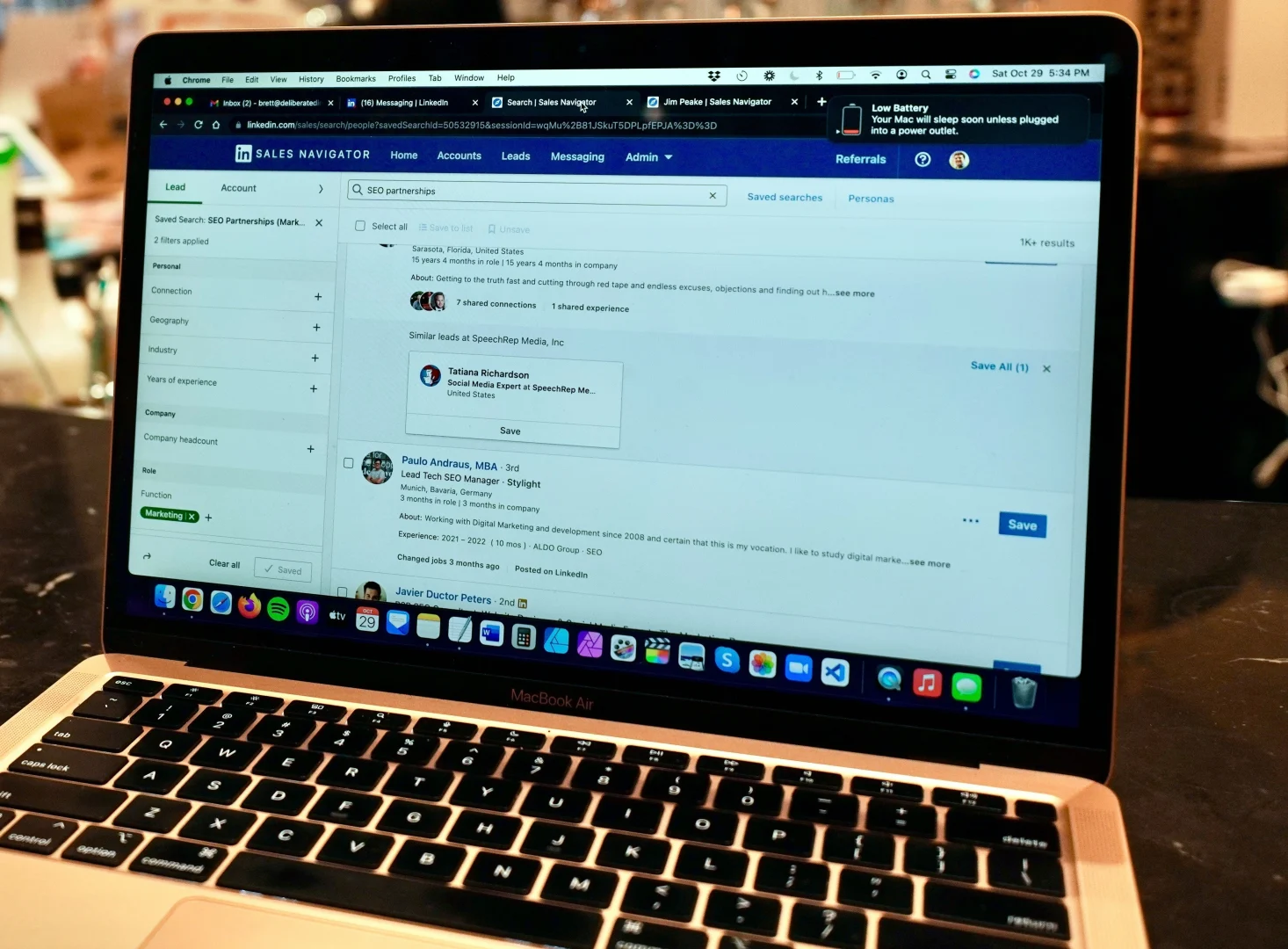
How a tourism professional should think on LinkedIn today.
LinkedIn is not about “being,” it's about be part of the conversation.
The profiles that work best are the ones that understand their role as ambassadors of your brand and your destination.
Being an ambassador is not selling; it is sharing knowledge, experiences and trends. Talking about sustainability, revenue, digitization or customer experience from the daily reality of the sector.
Whoever demonstrates judgment and knowledge generates trust. And in tourism, trust remains the most valuable currency.
A prime example: golf managers posting about operational efficiency or sales managers explaining how they use data to improve their customers' experience. These are not promotional posts, but public demonstrations of leadership.
What's next: AI, social search and human content
LinkedIn is evolving fast. Search by topic replaces hashtags and algorithms reward useful content, not promotional content.
Artificial intelligence makes it easier to segment, measure and automate tasks. But what really differentiates a professional is their human voiceThe way to tell what happens in your hotel, your golf course or your agency with authenticity and purpose.
The future of B2B recruitment will be increasingly influenced by data and automation, but the human element will continue to be what opens doors.
Technology amplifies. Credibility connects.
How to measure return
LinkedIn is not all about leads immediate results, but in business signals:
- Increase of qualified contacts (not quantity, but relevance).
- Meetings or proposals that arrive by private message.
- Invitations to collaborate or speak at industry events.
- Recommendations or spontaneous mentions in comments.
These are the indicators that reveal whether your content strategy is generating trust.
Measuring them requires time, but also a long-term vision. It's not just about getting clicks, it's about be in the right mind, at the right time.
The opportunity is in the conversation
B2B recruitment on LinkedIn is not a fad. It is the natural evolution of professional tourism marketing.
The space where relationships are created before there is a proposal, where visibility generates trust and where trust becomes business.
And as with any hotel reception, first impressions matter. Every publication is an opportunity to show who you are, what you know and why you can be trusted.
At weglobeyou we help tourism professionals to build their strategic presence on LinkedIn and turn it into a real B2B recruitment tool.
If you or your company wants to take that step, let's talk.