
 EN
EN  ES
ES LinkedIn is the trendy bar in the professional world. And as in any good bar, there are those who enter, say hello, connect and end up closing deals. And there are those who stay at the bar, watching. The Social Selling Indexor SSI, is the tool that tells you which group you are part of. If you are dancing well with the algorithm or if you need to make a move.
What is the Social Selling Index?
The Social Selling Index (SSI) is a metric developed by LinkedIn that scores your activity on the platform in relation to social selling. It measures everything from how well you maintain your personal brand to how well you interact with other professionals.
It assigns a score from 0 to 100 based on four key factors. But it's not just a little number to show off: the higher your SSI, the more visibility your publications will have, the more valuable connections you will generate and the more opportunities you will be able to create. For those of us who work in tourism, especially on the B2B side, this can make the difference between going unnoticed or becoming a benchmark.
The 4 pillars of the Social Selling Index
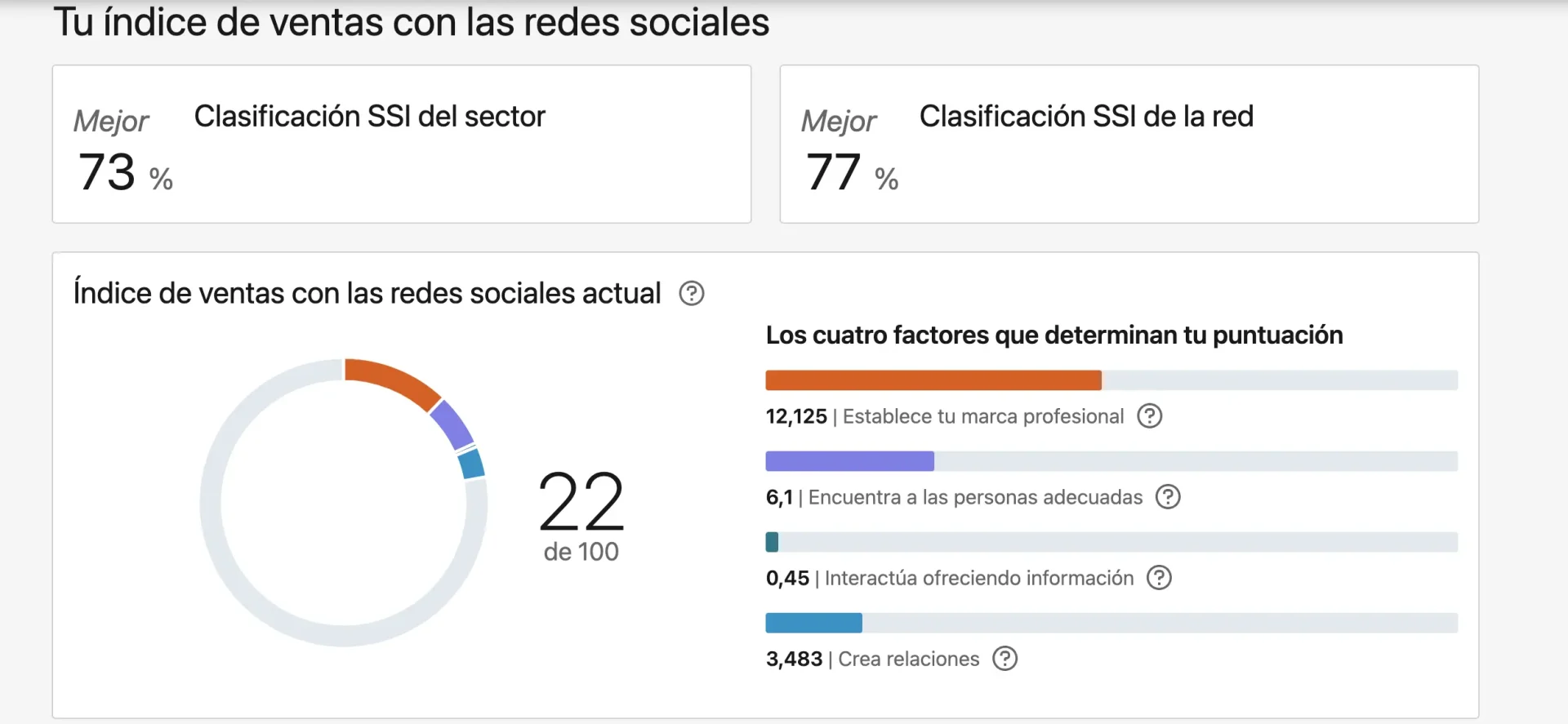
LinkedIn rates these four factors, assigning up to 25 points to each:
- Professional brand: Your profile is complete, conveys authority and you share relevant content.
- Find the right people: You connect with profiles aligned with your professional interests.
- Interaction with information: You share, comment and bring real value to your network.
- Relationship building: You not only connect, you keep those relationships alive.
How to check your Social Selling Index?
Easy: log in to LinkedIn and go to linkedin.com/sales/ssi. You will see your total score and how you compare to other professionals in your industry and network.
So... How much is "good"?
In general:
- More than 75You are doing very well.
- Between 50 and 75you have a route.
- Less than 50There is work ahead (and that is an opportunity).
In the tourism sector, where human relationships matter (and a lot), a good ISS positions you as a reference, especially if you are dedicated to B2B sales: hotels, MICE events, DMCs, tour operators, etc.
How to improve your Social Selling Index without dying in the attempt?
You don't need to be an influencer or spend all day on LinkedIn. But you can do things with strategy. Here are some keys we've worked on with our clients in the tourism sector:
1. Your profile is your showcase
- A professional photo, a background with personality and a headline that says more than your position. We are not talking about putting a nice phrase, but to build an identity that positions you. If you work in group recruitment, direct sales or events, your profile should speak clearly about that.
- An excerpt that talks about your value proposition. This is a space to tell what you do, why you do it well and what value you bring to the industry.
- Detailed experience with keywords in the tourism sector (MICE, revenue management, sustainable tourism...). Do not be afraid to link projects, articles or media in which you have appeared. Your profile should be optimized not only to be liked, but to attract those looking for tourism services on LinkedIn.
2. Connect with meaning
- When it comes to connecting, avoid automatisms. It's not about having thousands of contacts, but the right ones.
- Use the search filters to find decision makers, key players and related profiles. Try to find people with whom you really want to create synergies. This type of strategic connection will allow you to capture leads in the tourism sector without being invasive.
- Personalize your connection messages. If someone is involved in sporting events and you manage a hotel with specialized facilities, tell them. But tell them well. With context, with intent and without haste.
3. Share without fear (but with head)
- Post relevant content: industry news, your hotel's achievements, your own reflections. You don't need to post every day, but you do need to be consistent.
- Comment on other posts, congratulate achievements, share things that have value to your network. This type of activity enhances your professional presence on LinkedIn and positions you as someone who contributes, not interrupts.
- Participate in tourism groups and events, but contribute, don't just observe.
4. Relating is not just sending a message and that's it.
- Have real conversations, this is the only way to keep your relationships alive. Being interested in each other builds trust. A contact on LinkedIn is not worth much if you never interact.
- Say thank you, respond, get back in touch. LinkedIn is not a digital CV: it's a living network. And if you're in tourism, your ability to connect is as important online as it is at a trade show or on a sales call. That's the basis of any well-worked B2B strategy on LinkedIn.
Some truths that nobody tells you (but you should know)
- A high SSI doesn't mean automatic sales, but a low SSI takes away opportunities. But don't get obsessed with the score. It is a reference, not an end.
- No need to have a premium account or use bots to upgrade.
- Don't automate without criteria. Automate when you know to whom, when and why.
- Don't sell cold at the first message. Social selling is about building trust, not pushing. Listen, observe and contribute first.
Working your ISS is working your brand (and your future)
If you work in tourism, you have a lot to say. And if you say it well on LinkedIn, your Social Selling Index will improve. But even more important: you will reach the right people with the right message. And you must remember that in the tourism sector, the best sale is still the one that comes from a good conversation.
At weglobeyou we live connected to the tourism sector and the tools that make our clients grow. If you want us to give your profile or strategy on LinkedIn a makeover, write to us or subscribe to our newsletter. We promise not to bore you.