
 EN
EN  ES
ES They say a picture is worth a thousand words. Well, in the world of tourism, hotel photography can be worth a thousand reservations. Before a guest has even stepped into the lobby or tried out the mattress, he has already made a decision: to click "Book". And interestingly, it wasn't a welcome paragraph that convinced him. It was the images.
In fact, today, first impressions do not take place at the reception desk, but at the Bookingin Airbnbin Google Mapsin Instagram. Photography has become the first conversion funnel for any hotel, hostel, resort or rural accommodation. And we are not just talking about aesthetics, but about strategy: photography sells. A lot. And it sells fast.
The good news is that you don't need to have a five-star hotel to fall in love through image. You need to know how to tell it visually. And that's where we come in.
Why is professional photography key for a hotel?
Because competing on price is no longer enough. Today you compete on emotions. And emotion enters, almost always, through the eyes.
Professional photography for hotels is not a luxury. On the contrary, it is an investment with a direct return. Improve your online visibility, reinforce your brand, differentiate your proposition and, yes, increase bookings.. We have seen it with our own clients: a good photo report can make the difference between an invisible profile and a magnetic presence that needs no offers to attract.
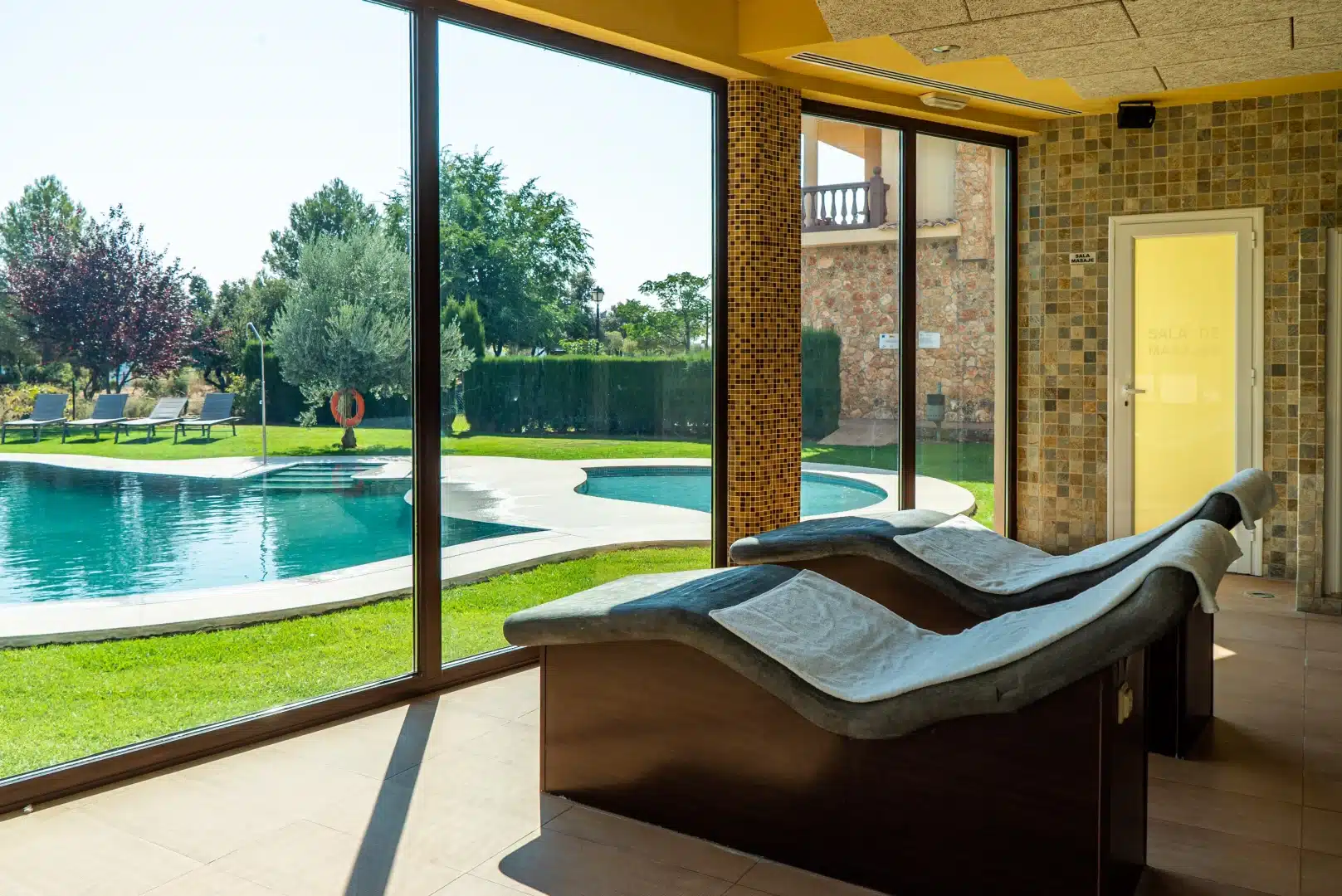
However, not just any photo will do. Neither the reception staff's cell phone nor the camera of the last century will do. Hotel photography is a specialty that requires technique, sensitivity, experience and a trained eye to understand what sells: not only what you see, but what you feel.
Therefore, when the images of your hotel are coherent, bright, appealing and professional, you are sending a clear message to the future guest: "You're going to be fine here". And that message, when well told, needs no further explanation.
Visual storytelling in hotel photography: telling experiences, not just showing rooms
Hotel photos should not look like a real estate catalog. You are not selling square meters: you are selling rest, exclusivity, disconnection. A good image doesn't just show a well-made bed. It makes you want to be there, with freshly ironed sheets, natural light coming in softly through the window and the silence that anticipates a good nap.
That's precisely what we call visual storytelling. And it's what separates a hotel that simply shows photos... from one that seduces.
When we work on a shoot for an accommodation, we don't shoot randomly. We think in scenes. In rhythm. How does the story begin? What moment arouses desire? How does it end? Each photo has a function: to engage, to excite, to convince.
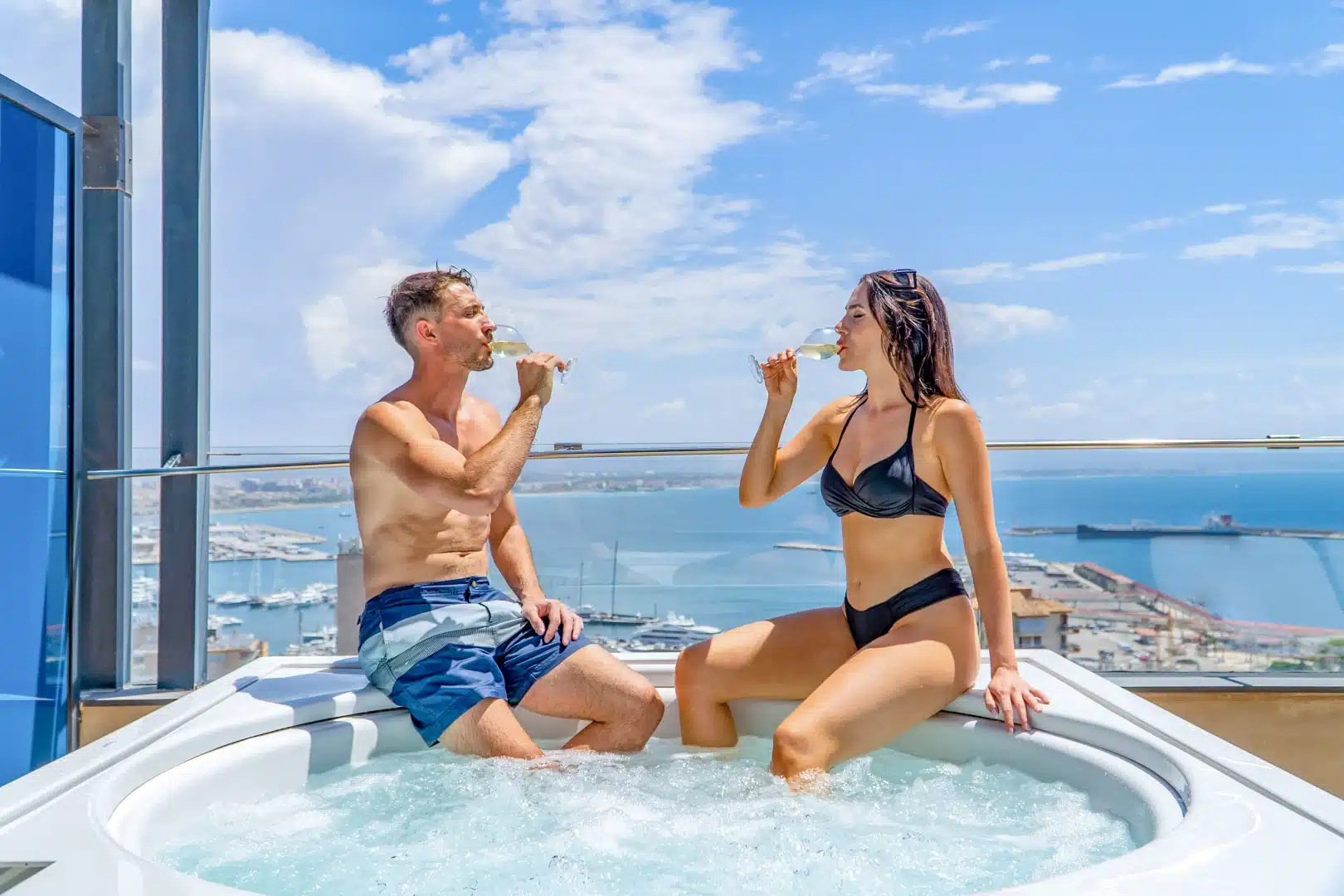
Therefore, the ideal is that the guest, upon seeing your images, not only understands what you are offering, but also that imagine yourself thereEntering the lobby, taking off your shoes by the pool, toasting on the terrace at sunset. That emotional connection is not improvised. It is created with intention. And it shows.
Essential types of photography for your hotel
If a picture sells more than a thousand words, a well thought-out gallery can sell your entire proposal. Therefore, it is not enough to show "the usual". The key is to show what makes you unique, what excites, what invites you to stay.
There are five types of photography for hotels that no accommodation should leave out if you want to fall in love from the first impression. Below, we detail them for you:
1. Inviting interiors
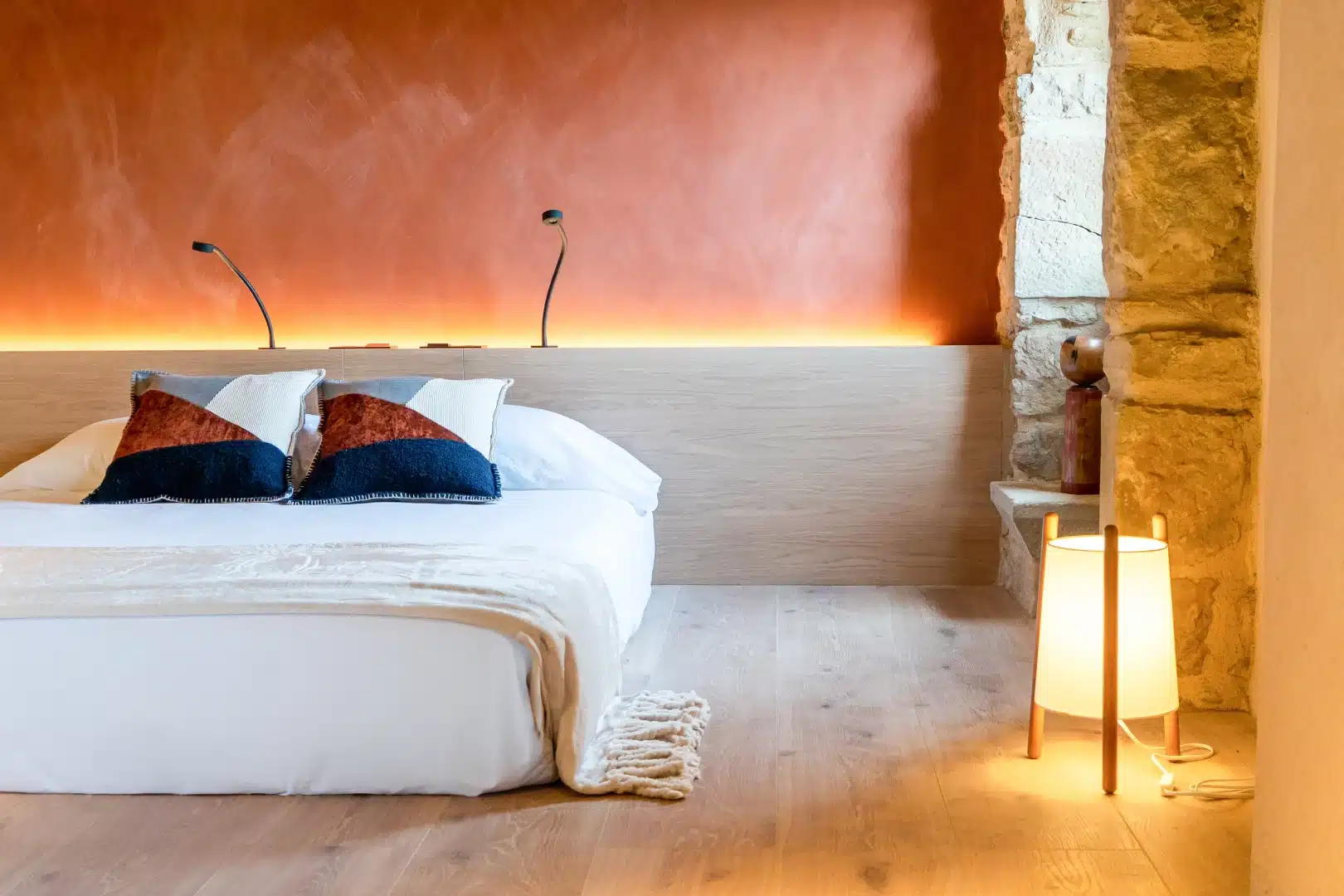
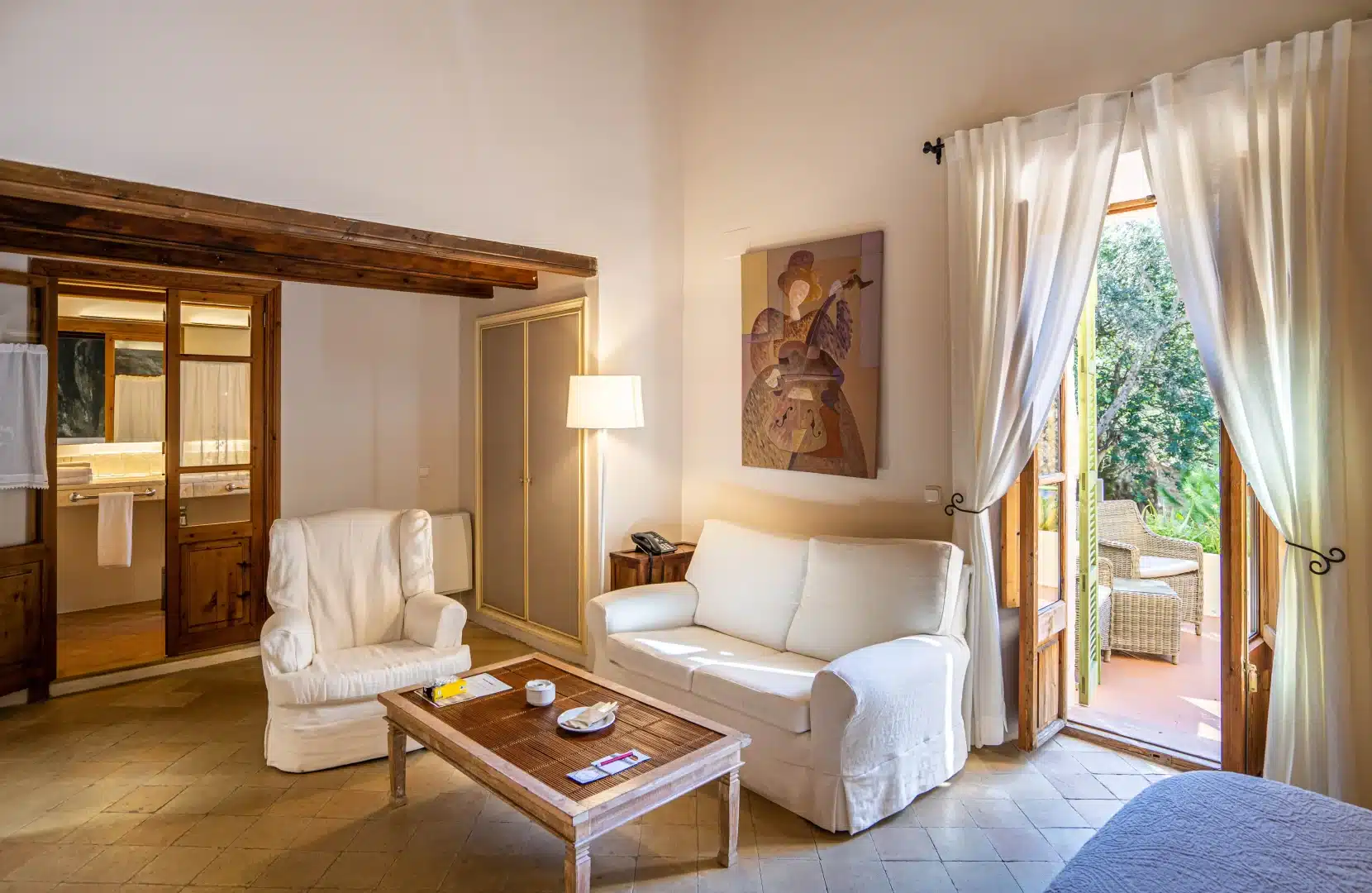
The rooms are the heart of the experience. However, it is not enough to show the bed. You have to transmit order, spaciousness, comfort and that something that makes the guest think: here I will really rest. Lights on, cushions in place, textures cared for. Nothing is casual.
2. Impacting exteriors
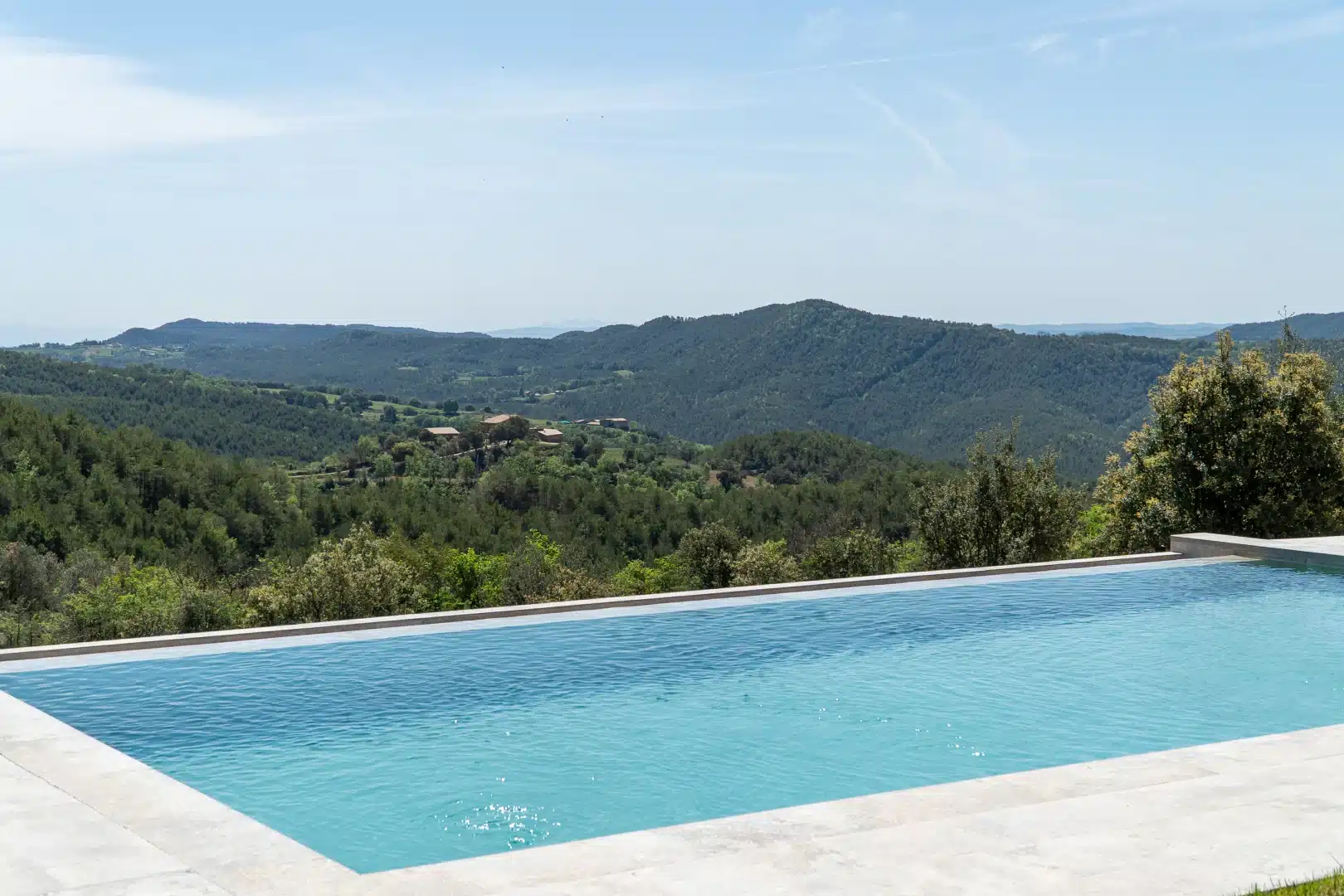
The facade, the entrance, the views, the gardens, the pool, the terrace. Everything adds up if you know how to tell the story. This is where the environment takes center stage, and where a good framing (and sometimes a well-piloted drone) can raise your online positioning.
3. Gastronomy through the eyes
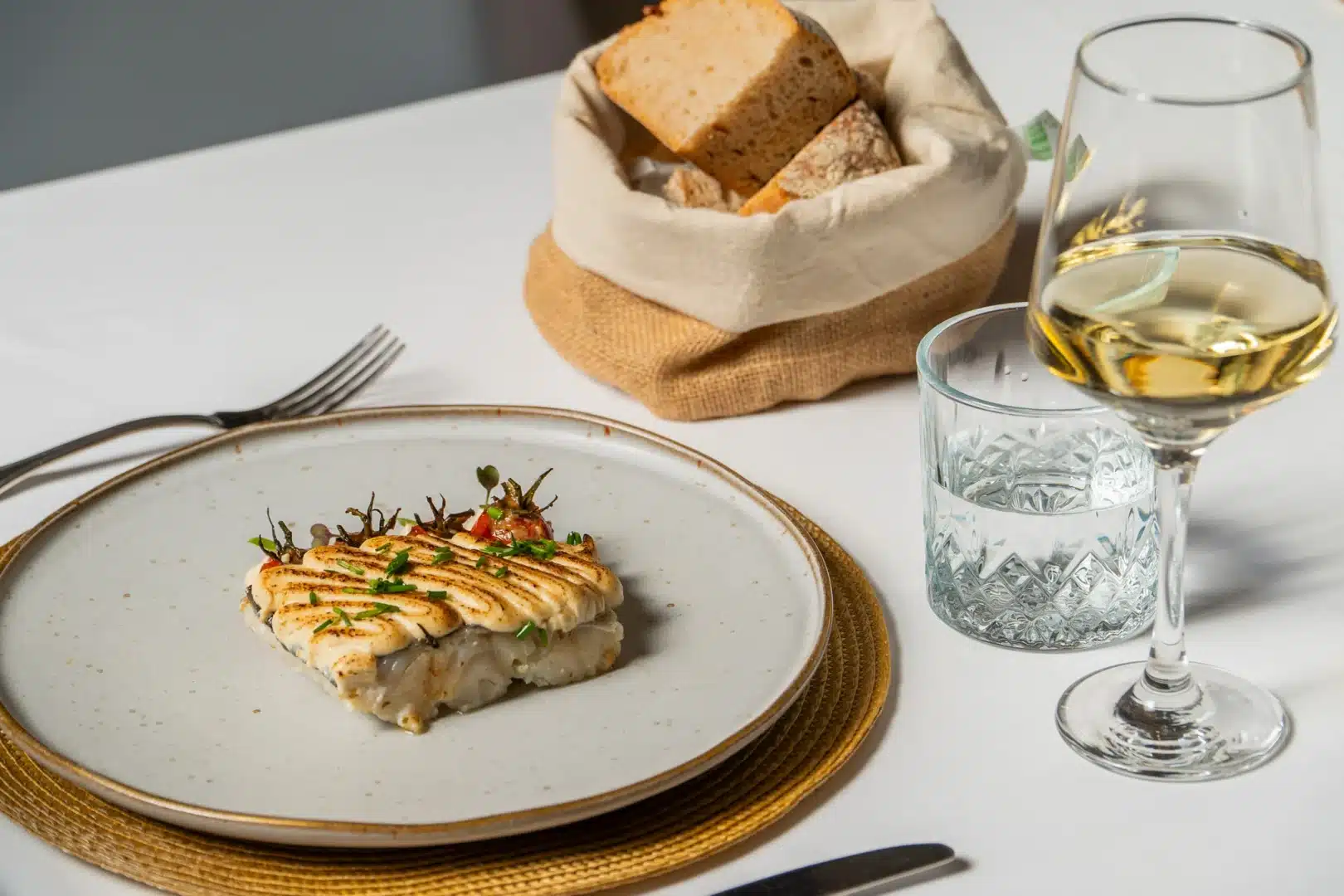
Breakfast by the window. A cocktail at sunset. The buffet ready to open. Gastronomic photography is not only for starred restaurants: it is one of the most converting contents in networks and OTAs.
And yes: buffets sell. A lot.
4. Experiences that connect
Not everything is infrastructure. You also have to show what you experience. A massage at the spa, a drink on the rooftop, a bike ride in the countryside. Showing experiences is showing emotions. And that generates desire. It also helps you escape from "more of the same".
5. People who humanize
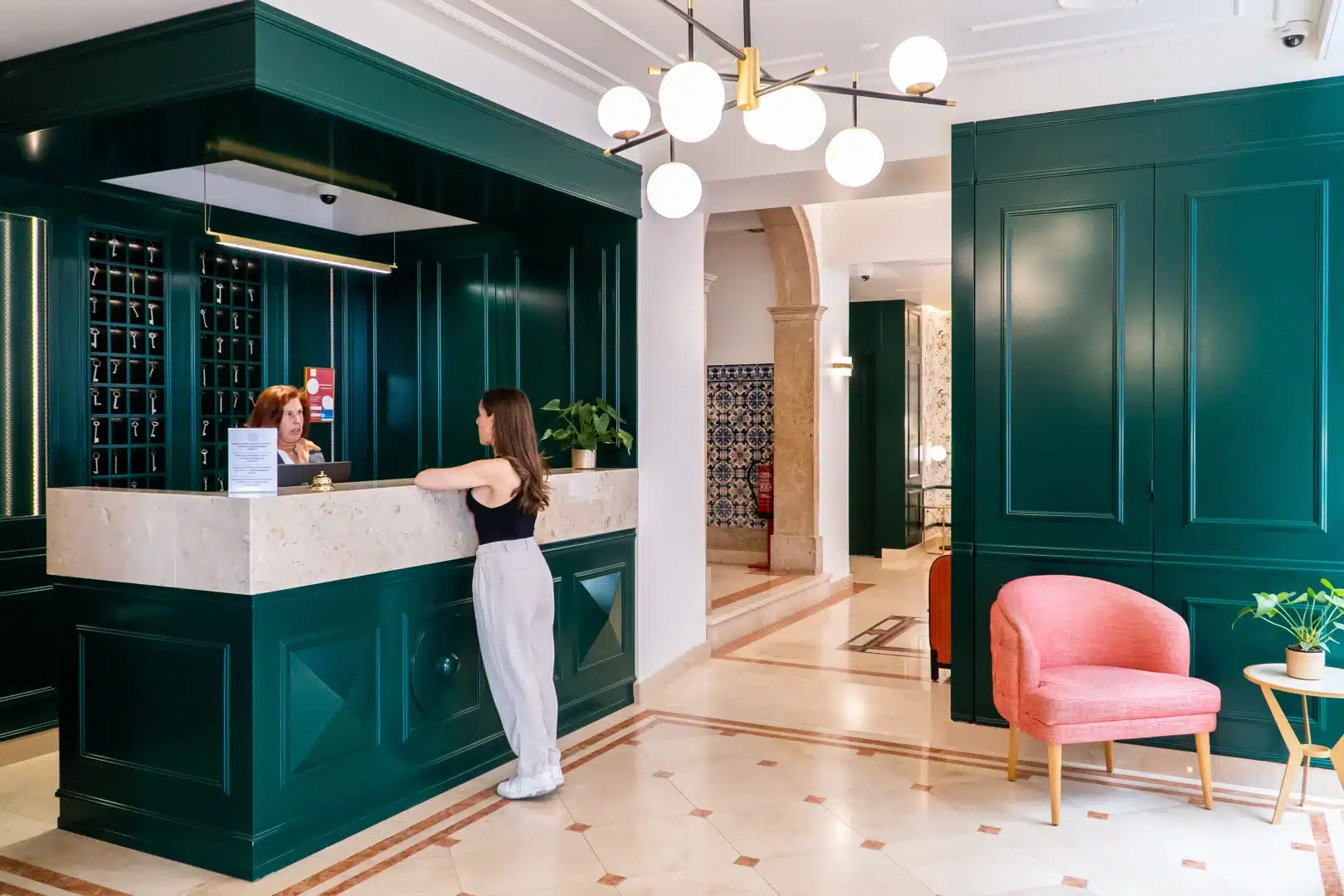
The team also communicates the brand. A smiling receptionist, a chef in action, a waiter preparing a cocktail: people convey confidence. They put a face to service. And that generates closeness and credibility.
In short, the important thing is not to have a thousand photos. It's having the right ones. The ones that talk about you without the need for text. The ones that not only show, but tell.
Common mistakes in hotel photography (and how to avoid them)
We see it more often than we would like: beautiful hotels that look like something else on the internet. And the worst thing is that it's not because the site doesn't have potential, but because the image doesn't do it justice. Sometimes because of carelessness, sometimes because we want to save on what sells the most.
Here are some classic mistakes that can sabotage the best of proposals:
1. Unforgiving lighting
Dark, yellowish or oddly shaded photos give an immediate sense of carelessness. Light is emotion. That's why, if you don't master it, the image doesn't excite and doesn't sell.
2. Misleading perspectives
Forced angles that distort, ceilings that seem to fall, beds that float. Showing spaciousness is fine, but without going overboard. Otherwise, visual honesty is lost, and that not only scares away bookings, it also brings cancellations and bad reviews.
3. Visual clutter
Wires dangling, curtains askew, a towel out of place. The camera catches it all. And the guest, too. As a result, what may seem irrelevant live, in the photo can ruin the scene.
4. Overdone edition
Unreal colors, exaggerated HDR, aggressive contrasts. The aim is not to make up the reality, but to show its best version. Therefore, editing should polish, not disguise.
5. Lack of consistency
It's one thing to have pretty pictures. It's another to have a meaningful gallery. Without visual continuity, without narrative or identity, the user doesn't know what to expect. And you know: when in doubt, there's a bounce.
Fortunately, avoiding these mistakes in hotel photography is easier than it seems: surround yourself with professionals, plan the session and be clear about what you want to tell. The difference is noticeable. And best of all, it translates into results.
How we work with hotel photography at weglobeyou
We don't take pretty pictures. We take photos that sell. And we don't say that out of posture, we say it because we have been generating real results for real hotels for years.
At weglobeyou we do not work with photography for hotels as an isolated piece, but as part of an integral tourism marketing strategy. Because we know that a good image not only improves your website: improve your occupation, your reputation and your positioning.
This is how we do it:
Strategic briefing
Before we take out the camera, we sit down with you. We want to know what you want to project, who your ideal guest is, what emotions we want to provoke. After all, every hotel has a different story and there is no one way to tell it.
Scouting and light planning
We visit the hotel, study the spaces, the orientation, the key hours. In this way, we avoid improvising and build a vision with intention.
3. Professional Shooting (with good vibes)
We work with our team of hotel and hospitality photographers. People who know how to make the most of a small bathroom, how to turn a suite into a promise, or how to make a perfectly rolled towel speak of luxury. And yes, we use everything we need: specific optics, natural and artificial light, tripod, drone and the trained eye that makes the difference.
4. Consistent and versatile editing
We edit with the web, OTAs, networks, campaigns in mind. We adjust contrast, sharpness, white balance. And, of course, without absurd filters or Instagram effects. Just your hotel, in its best version.
5. Delivery ready to sell
We deliver an optimized gallery in channel-specific formats. So your images don't just look good: function:.
We know that what you sell are not beds. You sell experiences, atmospheres, emotions. And we know how to photograph them.
Measurable results: more bookings, better positioning, better perception
When someone says "photography sells," it sounds nice. However, when you see how figures change after renovating your hotel's gallery, it's no longer just a phrase: it's a fact.
- A 20 to 30% increase in reserves after a well-planned professional session is not uncommon. We have experienced it with small, medium and large clients. In fact, in almost all cases, the conversion curve improves in less than two months.
- On platforms like Booking or Airbnb, accommodations with professional photos appear higher, receive more clicks and generate more trust. And as you know, in a saturated environment, that's gold.
- In addition, brand perception is elevated. Better images = better comments = greater digital authority. It's not magic, it's a chain of trust that starts with an image that conveys what it should.
- And if that's not enough, with better photos, you can maintain (or raise) your average rate. Because perceived value is not calculated in Excel. It's built visually.
Investing in professional photography is not a matter of aesthetics. It's a sales lever. And if it's done strategically, it shows in the numbers.
Practical tips on how to prepare for a hotel photo shoot
A good session starts long before the first shot is fired. And although our team takes care of everything, when the hotel gets a little involved in the preparation, the result is even better.
In fact, platforms such as Airbnb offer very useful guides on how to prepare an accommodation for a professional shoot, with tips that you can also apply to your hotel. However, here are some key tips we always give our clients to make the shooting flow and the photos shine:
Think of the room as if it were a magazine cover.
Tensioned sheets, carefully placed cushions, lined curtains, mirrors without fingerprints. Every detail adds up. A misplaced wrinkle can ruin an otherwise perfect photo.
2. Play in favor of light
If you can, book the rooms with the best orientation. Sessions are usually planned according to natural light. And if it rains, let it rain beautifully, but better if it doesn't.
3. Obsession level cleaning
Cleaning for a guest is not the same as cleaning for a camera. The lens sees EVERYTHING: dust specks, loose plugs, wires out of place. We check every shot, but a tune-up beforehand speeds everything up.
4. Involves the staff
Receptionists, waiters, waitresses, cooks... They are part of the soul of the hotel. Having them around during the session allows us to include human moments that connect much better than any slogan.
5. Be clear with your visual identity
Tell us what emotions you want to convey. Is it a romantic getaway hotel? A family retreat in nature? A boutique space with design? The more we know about you, the better we can tell your story.
A well-prepared photo shoot is like a staging. And when everything is ready, the magic happens.
Frequently asked questions about hotel photography
1. What kind of photography does a hotel need for social networks?
Images with soul. It is not enough to show empty rooms: what works in networks is what transmits life, emotion and closeness. Natural photos, well lit, with careful details and, if possible, with real people enjoying the moment. The key: authenticity and visual rhythm.
Why is it better to hire a photographer specialized in hotel photography?
Because knowing how to take photos is not the same as knowing how to sell experiences through images. A hotel photographer masters the space, the light, the angles that enlarge without distorting, and understands what a guest is looking for when they enter your website or your Booking profile. It is visual marketing in its purest form.
3. What should be included in a professional photo shoot?
Rooms (inside and out), bathrooms, lobby, common areas, restaurant, amenities, pool, environment, staff in action... And if you have something that sets you apart (a charming spa, a pool with views, a rooftop terrace full of life), that goes without saying. Everything that is part of the experience must be there.
4. How often do you renew the images of the hotel?
Ideally, every time you renovate part of the hotel or change seasons. Photos showing thick blankets in the middle of July don't sell. Neither do those that have been going around the Internet for years. Updating is taking care of your image. Literally.
5. How much influence does a good photo have on the booking decision?
Much more than it seems. On platforms such as Booking or Airbnb, the image is the first filter. A good photo generates desire, trust and clicks. And more clicks = more bookings. It's that straightforward.
An image that sells. A strategy that converts.
Hotel photography is not just a matter of aesthetics. It is positioning. It is desire. And differentiation.
In short, it is the first "yes" that the guest gives you before knowing anything else about you.
At weglobeyou for years we have been helping accommodations to improve your visibility, increase bookings and elevate your brand through images that not only show, but tell. We don't improvise. We don't use templates. We create visual content aligned with your identity, with your audience, with your objectives.
Because a good photo gallery is not improvised. It's conceived, planned, executed and optimized to work on all your channels.
Are you ready for your hotel to stop looking like "just another one" and start really standing out? Write to us at and we will help you transform the image of your accommodation into a booking machine.