
 EN
EN  ES
ES ROC Hotels is the protagonist of the first chapter of our new series of success stories in tourism marketing. We have not chosen his story by chance: it combines technological innovation, a customer experience with attention to detail and a decisive step towards hotel digitalization.
At weglobeyou we believe that words are carried away by the wind and that what matters are the actual results. That is why, instead of filling this page with promises or textbook phrases such as "our commitment to the customer is the utmost", we prefer to show concrete examples.
This series is not based on theories or fictitious campaigns to show off our portfolio. These are real stories, of hotels and chains that have trusted us to take their strategy to the next level. Here we talk about clear challenges, well thought-out solutions and, above all, what happens when you combine strategy, creativity and technology with a team that lives and breathes tourism.
The tourism sector is going through a key moment: the post-pandemic traveler is more digital, more demanding and more unfaithful to brands than ever before. The competition is no longer just the hotel next door, but any alternative that appears on the customer's cell phone at the right time. In this context, differentiation is not optional: it is a matter of survival.
Who is ROC Hotels and what did it seek to achieve?
ROC Hotels is not just any chain. With an international presence and a clear vocation for vacations, its hotels are located in the following areas strategic destinations such as Mallorca and CubaThese are two very different markets, but with a common denominator: they are highly competitive markets, where differentiation is key to attracting and retaining customers.
ROC Hotels and Mallorca
In Mallorca, ROC Hotels coexists with a huge offer of accommodations ranging from large all-inclusive resorts with dozens of services, to charming boutique hotels that are committed to more personalized experiences. It is a destination where every meter of beach seems to have its own hotel proposal and where the competition to capture the traveler's attention begins long before he sets foot on the island, on the same screen of his computer or cell phone.
Here, the client is looking for a very specific combination: comfort so as not to worry about anything, a location that allows him to move around easily and a service that helps him to make the most of every day of his stay without friction. In this saturated environment, small details such as agility at check-in, the quality of information about the destination or the speed with which a query is resolved make the difference between a successful stay and an experience that invites you to repeat.
Founded with the idea of offering functional and accessible experiences, ROC Hotels has grown while maintaining a clear philosophy: taking care of details without losing efficiency and balancing comfort with a competitive price that makes it attractive to different customer profiles. Its proposal is not to promise excessive luxury or inaccessible exclusivity, but to offer real, tangible value, from booking to check-out.
However, his team was clear that, in a hyper-connected world and with an increasingly informed and demanding guest, it is not enough to meet expectations. Today, travelers not only compare prices: they compare experiences, reviews and sensations. Therefore, to remain relevant, we had to go one step further: surprise, anticipate and solve needs even before the client verbalizes them, thus generating a positive memory that translates into loyalty and recommendations.
The challenge: beyond good wifi
Today, traveling is synonymous with being connected. Cell phones, tablets, laptops... and a list of expectations that starts with something as basic - and at the same time as critical - as wifi. In most cases, it is the first thing guests look for when they get to their room, even before unpacking. According to industry data, the 94 % of travelers consider free wifi to be an important factor when it comes to choosing a hotel, and more than a third rate it as decisive. It's not just about leisure: for many, it's the tool that allows them to work remotely, communicate with family members or plan their activities during their trip.
ROC Hotels detected two clear frictions from the first minute of the stay:
- On the one hand, the connectionThe fact that searching for the network, entering a password or scanning a QR that sometimes did not work properly generated small frustrations that did not help to start the experience on the right foot and that, when accumulated, could influence the overall perception of the service.
- On the other, internal communicationThe information was scattered on physical signage, calls to reception or PDFs sent by email, forcing the guest to invest time and effort in finding what they needed. This, in a vacation or leisure travel context, breaks the rhythm and can reduce interest in exploring all the options offered by the hotel.
This channel dispersion not only meant a loss of efficiency for the team, but also affected potential revenue for ROC Hotels. A customer who doesn't know there is a special tasting menu, spa treatment available or extra activity is unlikely to book it. Solving this was a golden opportunity for improving the experience, facilitating access to information and increasing domestic consumption without pressuring the guest, simply making things easy for them.
Our tourism marketing strategy for ROC Hotels
At weglobeyou we do not believe in canned solutions or in applying the same recipe to all clients. Each hotel, each chain and each destination has its own personality, its own type of guest and, therefore, its own needs.
Before we talk about specific tools or technologies, we sat down with the team from ROC Hotels to draw a detailed map of the guest experience, from the moment they make a reservation until they leave the room. We analyzed which information they consult most frequently, at what times of the day they seek more interaction, which services arouse recurring interest and which could have room for growth with more direct communication. This diagnosis revealed not only obvious opportunities, but also small points of friction that, if resolved, could improve satisfaction and increase internal consumption.
Our solution for Roc Hotels
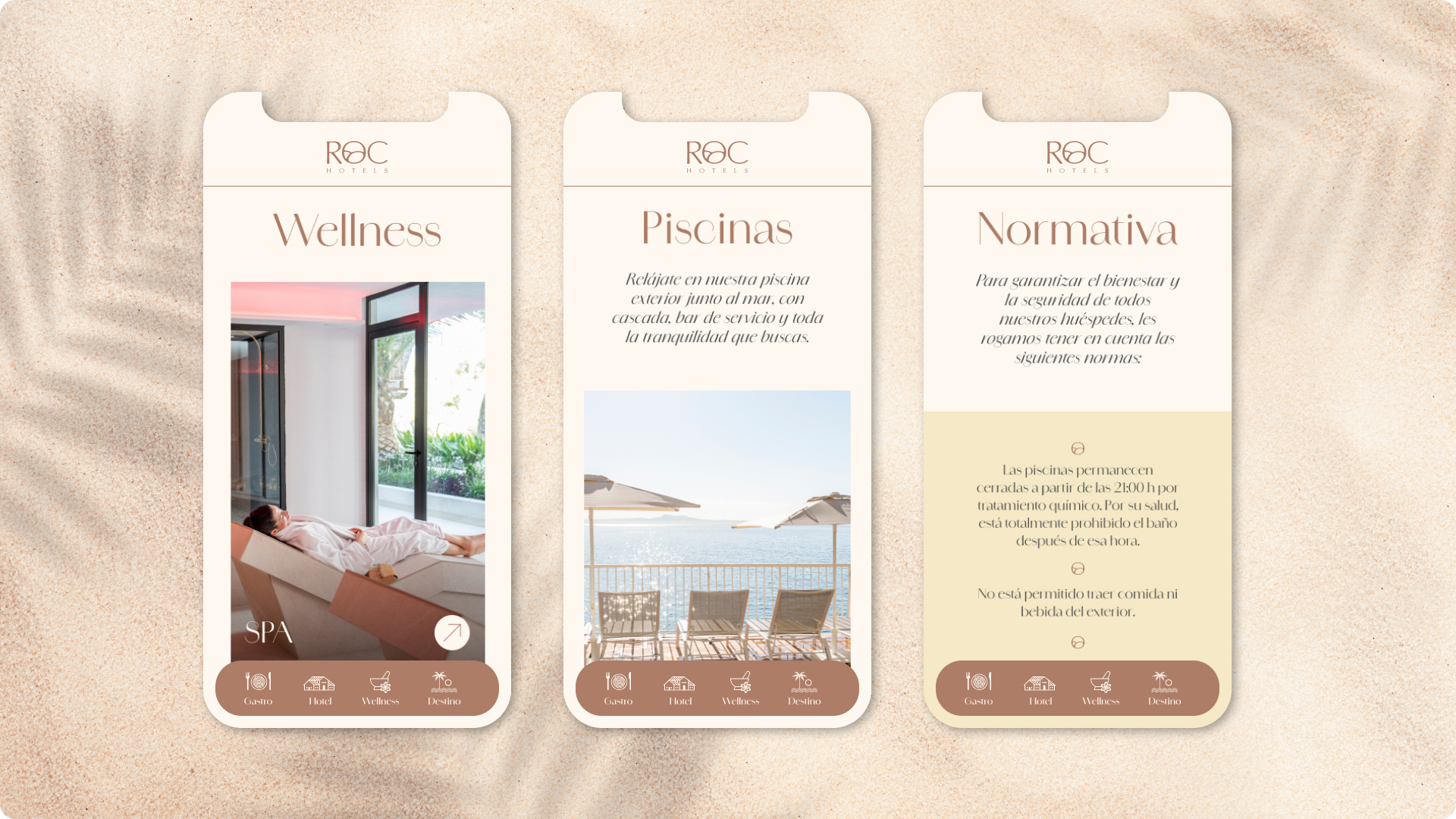
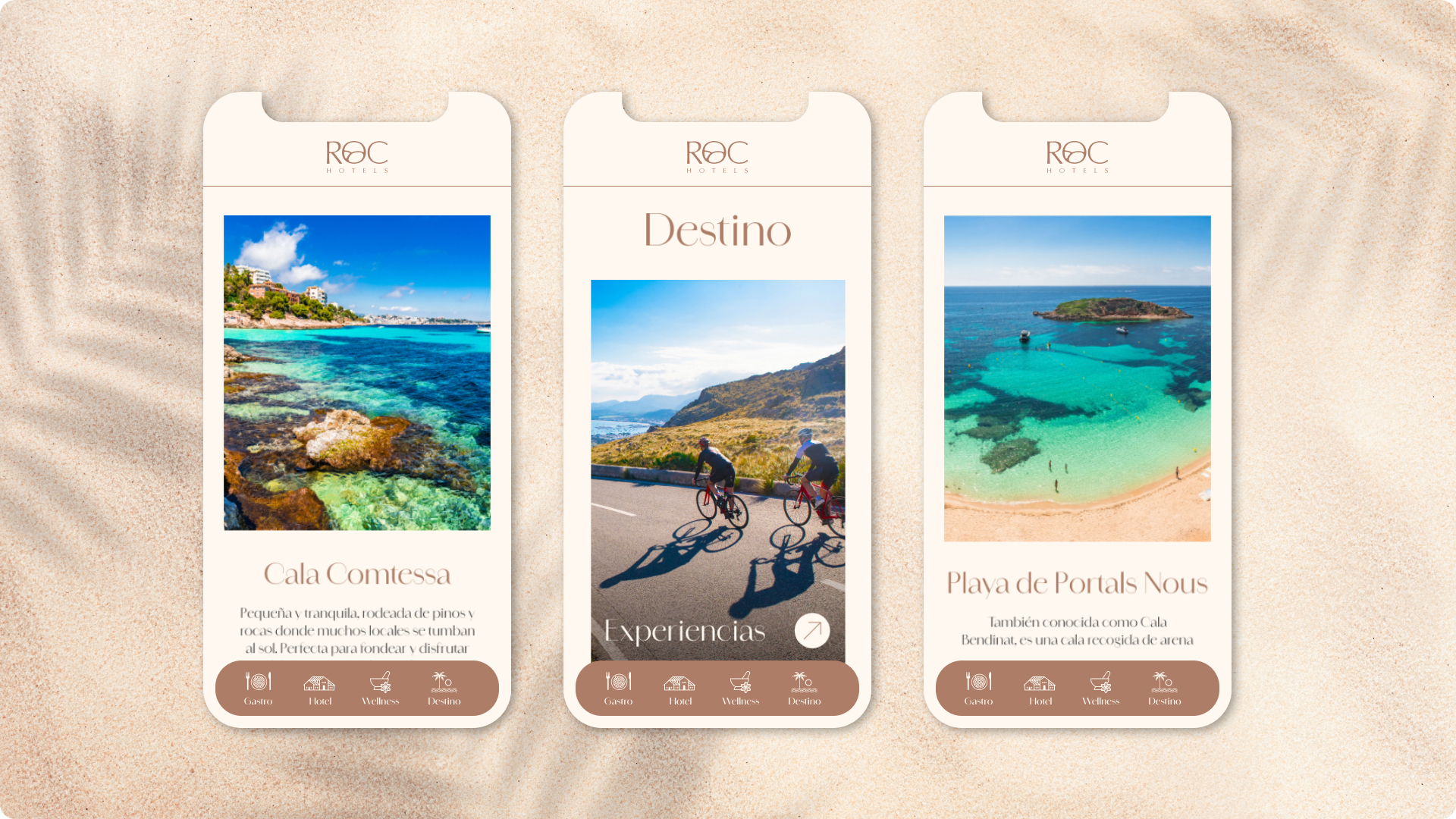
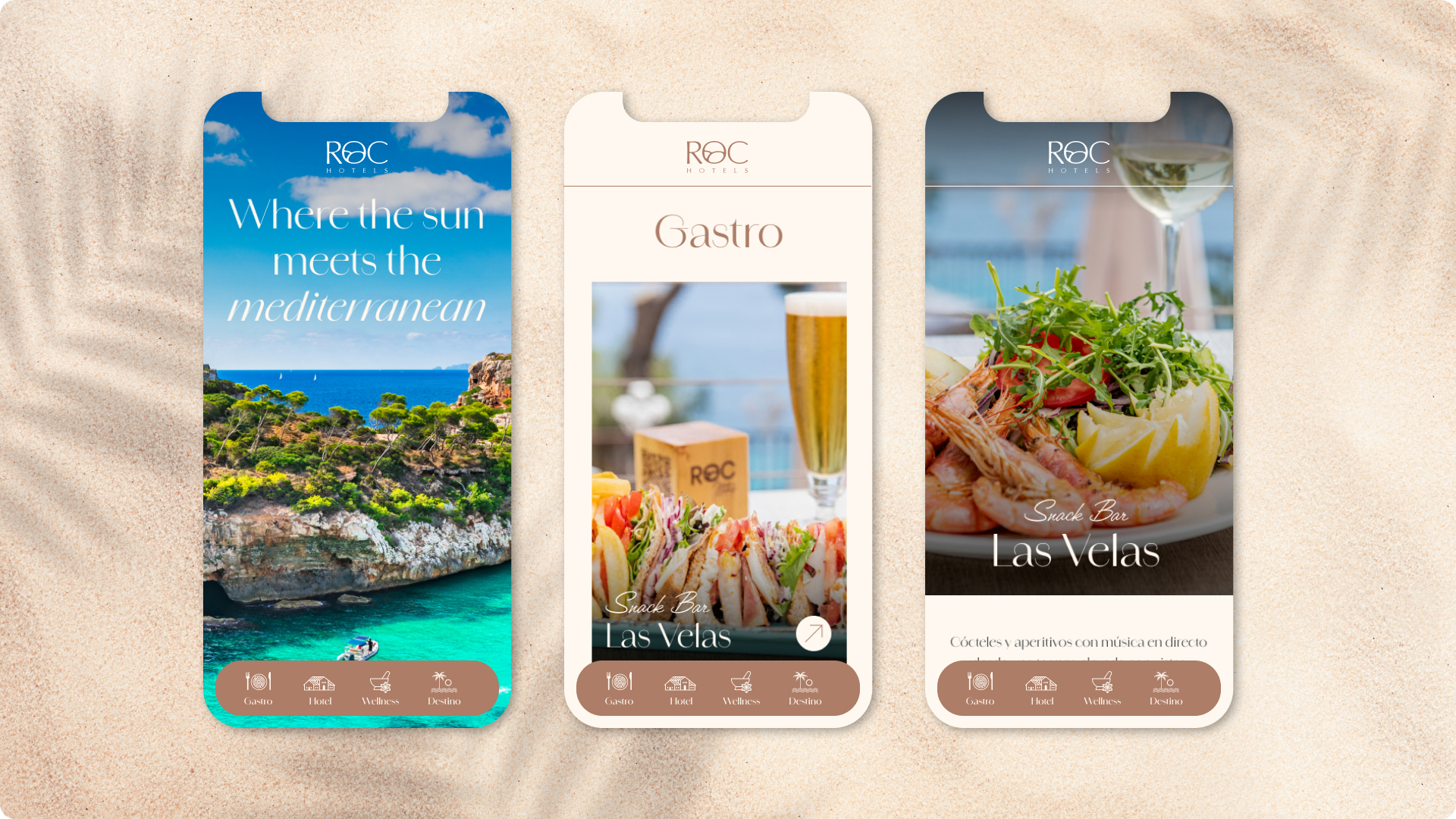
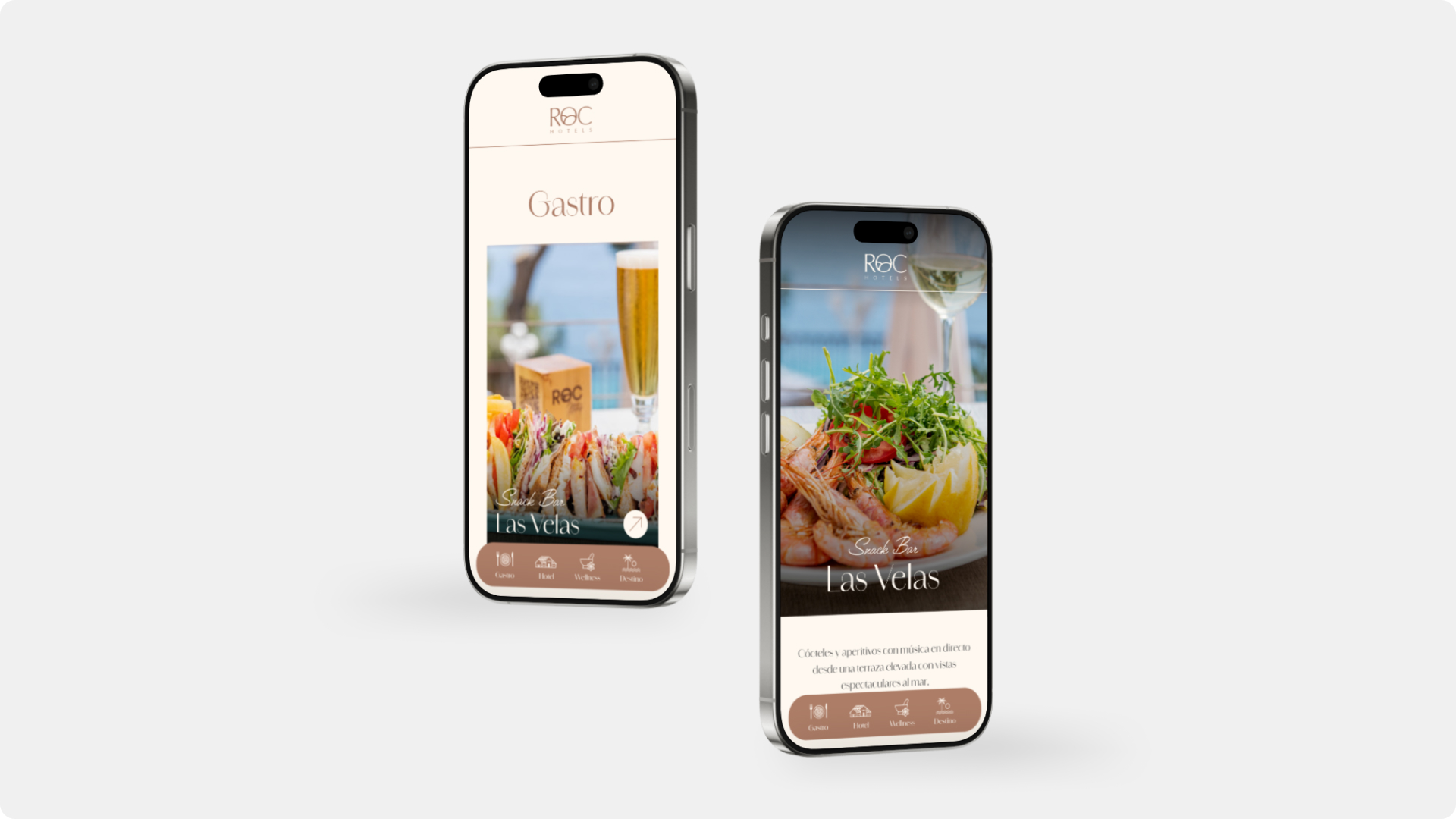
The solution was born from this analysis: a tailor-made digital directoryfully adapted to the identity of ROC Hotels and integrated with Wipass. The objective was clear: to transform an apparently trivial moment - the wifi connection - into an immediate, fluid and useful experience for the guest and, at the same time, into a strategic communication and sales channel for the hotel.
Design played a decisive role. We wanted the guest, as soon as they logged in, to find an attractive, intuitive and perfectly aligned visual environment with the brand. From that single panel could access the digital menu of the restaurants, consult schedules and services, book activities or contact reception, all without having to jump between applications, external websites or physical brochures. The key was to minimize the steps to get to the information and make it easier for the guest to discover everything ROC Hotels had to offer.
In addition, we connect the system to marketing and analytics tools already used by ROC Hotels, so that every interaction was recorded as useful data: what content was consulted most, at what times, on what devices, and which services aroused the most interest. And, most importantly, this information was not stored in a report that no one would ever open again: it was used to adjust campaigns in real time, optimize service schedules and detect internal sales opportunities that previously went unnoticed.
An aside: what is Wipass and why do we like it so much?
Wipass is not "just another gadget" that is placed on the counter to appear modern. It is one of those technologies that, at first glance, seem simple but, when well integrated, completely change an everyday process. It works through NFC technology, which allows the guest to access Wi-Fi and a set of digital resources without intermediate steps, complicated passwords or application downloads, simply by bringing their cell phone close to the counter. This immediacy not only saves time, but also conveys a sense of modernity and attention to detail from the very first moment.
In a hotel environment, this type of solution has an immediate impact. It means improve the perception of serviceIt also reduces the workload at the front desk and frees staff from repetitive tasks such as giving out passwords or explaining where to find certain information. It also means centralize communication in a single digital point that the guest can consult at any time and from anywhere, with the assurance that the information is always up to date.
At ROC HotelsWipass has become more than just a technological tool: it is the access key to the hotel universe. From the same device, the customer can book activities, consult recommendations and information about the destination, review the digital menu of restaurants or take advantage of exclusive promotions designed to encourage domestic consumption. Everything is just a gesture away, reducing barriers and encouraging the guest to interact more with the establishment's offerings.
But what really wins us over about Wipass is its ability to transforming a basic action - connecting to wifi - into a valuable data collection point. Every click, every service consulted, every moment in which the guest interacts with the system generates information. And in tourism marketing, this data is pure gold: it allows for better segmentation, more effective campaigns, personalized communication and, in short, smarter and more profitable decisions.
Results: from wifi to a strategic asset
The implementation of the digital directory with Wipass was a turning point in the dynamics of the hotel. What was once a purely functional procedure - entering a password or scanning a code to access the wifi - was transformed into a a memorable first contact with the brand. The guest took just a few seconds to connect and, almost without realizing it, was already navigating through a digital environment that opened the doors to the ROC Hotels universe: from the gastronomic offer to the activities and experiences designed for their stay.
The effect was tangible from the very first days. The use of internal services increased because the customer, having all the information at hand, discovered options that previously might have gone unnoticed. There was more restaurant reservations, increased participation in activities and a better use of internal promotions thanks to the visibility and ease of access provided by the system. This not only improved the guest experience, but also drove additional revenue in areas complementary to lodging.
For the ROC Hotels team, the change meant gaining visibility into real customer behavior: which services aroused the most interest, at what times there were more interactions or which were the most common queries. This information made it possible to adjust supply and redistribute resources more efficiently, optimizing schedules, reinforcing personnel at peaks of demand and adapting promotional campaigns to the preferences detected.
And it was not just an operational or economic impact. The brand image was strengthened. ROC Hotels began to be perceived as a chain that understands today's travelers, is committed to innovation and knows how to make things easy for them at every moment of their stay. In a saturated market, where many offer similar facilities, that perception of modernity and attention to detail is a decisive factor that can tip the balance at the time of booking and encourage long-term loyalty.
Lessons for other hotels
This case shows that major changes do not always require structural reforms, lengthy projects or million-dollar investments. Sometimes, the real transformation is in the detailsThe key is to identify a friction point in the guest experience, address it creatively, and leverage the right technology to solve it elegantly and effectively. That combination - foresight, innovation and execution - is what turns an operational improvement into a true competitive differentiator.
In tourism marketing, every interaction counts. It doesn't matter if it's a great branding action or an everyday gesture such as connecting to the wifi. From the moment the guest sets foot in the hotel - or, as in this case, from the moment they bring their cell phone close to a Wipass device - every contact is an opportunity to offer value, surprise, increase internal consumption and, above all, strengthen the relationship with the customer. Turning those moments into seamless and memorable experiences is the key to a traveler not only remembering their stay, but also recommending and repeating it.
This type of initiative also demonstrates that technology is not an end, but a means to an end. It's not about implementing the latest fad, it's about choosing the tool that really fits with the hotel's strategy and delivers tangible benefits to customers and staff. When that alignment exists, the result is not just better service: it's a more profitable business and a stronger brand.
Why this case represents us
At weglobeyou we do not apply standard formulas or believe in "copy and paste" solutions. Each project starts by really listening to the client, analyzing their situation and competitive environment, and proposing solutions that make sense for their specific case. Then, we execute with a very clear focus: to achieve measurable results that have a direct impact on the operating account of the business.
With ROC HotelsThe process was a perfect example of this approach. We started with an accurate diagnosis that identified frictions and opportunities, developed a fully customized digital solution and integrated it intelligently with the overall strategy of the chain. The result was clear: a basic service transformed into a marketing, loyalty and additional revenue-generating tool.
For us, the ROC Hotels project sums up very well what it means to do tourism marketing with purpose: it is not just a matter of carrying out isolated actions, but of find the hidden potential at every point of customer contact and put it to work to make the experience better and the business more profitable. That is, in essence, our way of working: to look where others don't look, to spot what others overlook and turn it into a real competitive advantage for our clients.
What's next
This success story with ROC Hotels is just the first stop on a journey that will take us through very different projects, but which share a common denominator: results that are noticeable. Each story will have its own context, challenges and solutions, but they will all share the same formula: well-thought-out strategy, creativity that connects and flawless execution. That is the combination that allows us to transform ideas into real results and satisfied customers into true brand ambassadors.
If you want your hotel, resort or restaurant to be the next protagonist of one of these articles, you know where to find us. At weglobeyou We don't promise the impossible or sell smoke: we design strategies that work, execute them with precision and measure every step so that the impact is as clear as ROC Hotels.