
 EN
EN  ES
ES There are many ways to take care of the customer, but not all of them improve profitability. The guest experience in hotels is not just about smiles at the front desk, nice notes in the room or a friendly question at check-out. For it to generate direct bookings, good reputation or higher ADR, it needs to go much further.
The guest experience, the real one, does not start when the customer enters the hotel, but long before, when he is still deciding whether to book. And it's not just about "making them feel comfortable"; it's about guiding them, exciting them, getting to know them and convincing them.
Properly stated, the guest experience is not a nice gesture. It is a business strategy. And when it is designed with intention, it shows at the cash register.
What is (and what is not) guest experience?
The guest experience in hotels is the strategy that turns every interaction with the guest into an opportunity for sales, loyalty or differentiation. Unlike good service, which responds to specific needs, the guest experience guides the customer from before booking to after check-out.
| Guest Service | Guest Experience | |
|---|---|---|
| Approach | Transactional | Strategic and emotional |
| Timeliness | Specific moments | The entire guest journey (guest journey) |
| Objective | Immediate satisfaction | Loyalty, recall and recommendation |
| Role of the hotel | React | Anticipate and guide |
That's why it's not enough to serve well. You have to design the experience with head, intention and data. A well-thought-out guest experience starts with understanding who your customer is and what matters to them, tracing their entire journey from inspiration to post-stay, detecting key moments where you can add value -and capture it too-, and designing interactions that leave a mark both in their memory and in your metrics.
Think of it this way: a couple with children does not need the same welcome as a senior German couple. A regular guest should not receive the same post-stay email as one arriving from Booking. And someone who has been at the hotel for 24 hours might appreciate a massage suggestion, but not a breakfast offer if it's already included.
The guest experience is not improvised. It is segmented, it is automated, it is written with intention. And yes, it also excites.
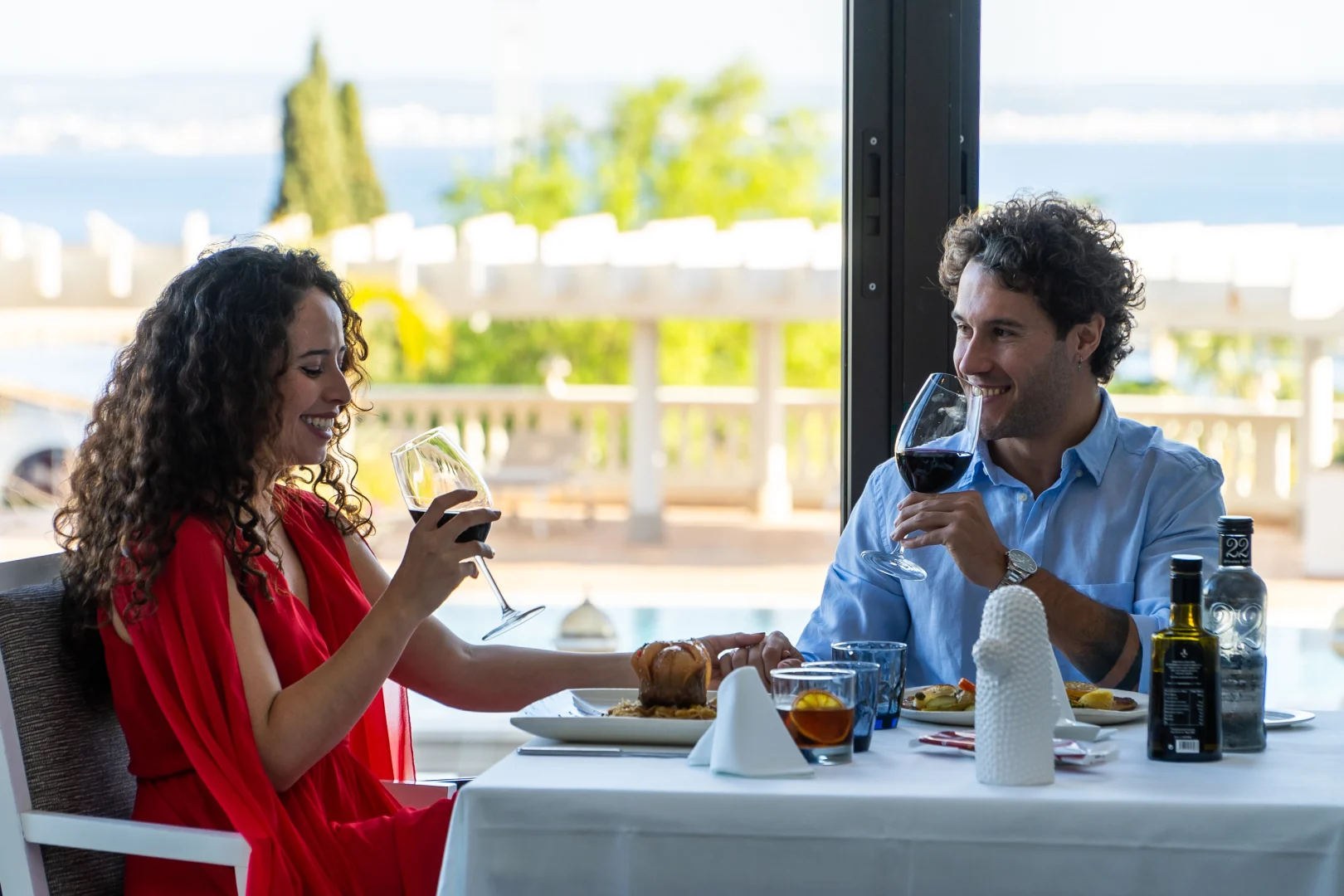
From service to strategy: why guest experience sells more
Guest Service is putting out fires. Guest Relations is giving hugs. Guest Experience in hotels is to build an accommodation where the customer does not want to leave... And if he leaves, he should come back with friends.
It may sound like an inspirational phrase to hang at the front desk, but it's a business reality. While some hotels are still focused on serving guests well, others are already designing experiences that turn every interaction into a sales opportunity.
Good service is a must. But it doesn't hold you back. A well thought-out experience does.
Why is guest experience in hotels a competitive advantage?
Because a memorable experience improves online reputation. Because a guest who feels listened to is easier to build loyalty. And because a satisfied customer is much more receptive to a upsellto a second visit or to recommend you publicly.
These are the main reasons why guest experience in hotels improves results:
- Direct bookingsThe better the experience, the more likely the guest will return without intermediaries.
- Average rateIf he perceives value, he is willing to pay more.
- In-stay consumptionWith the right message and the right timing, it is easier to sell dinners, massages or late check-out without having to force.
- Digital reputationThe reviews not only tell how the stay was, but also how you felt during the whole process.
This is not about nice gestures. It's about strategy.
Designing the guest experience in hotels: where do I start?
The guest experience in hotels is not improvised. It is designed, just as a marketing campaign or a pricing strategy is designed. And the first step is not to think about amenities. It is to think about people.
- Segment (for real): Not all your guests are the same, nor do they travel for the same reasons, nor do they look for the same things from your hotel. It makes no sense to offer the same message, service or detail to a couple celebrating their anniversary and a family with two small children and a stroller. Segmenting is not dividing by nationality or channel. It is to understand motivations, consumption patterns, expectations and behavior. It is knowing who you are targeting and with what intention.
- Plot the complete route: From the first search to the post-stay email. Every touch point counts. Every friction, too. Analyze the customer journey complete and identify: where there are questions (does your website answer what you need?), where there are opportunities (when to suggest an upgrade or a dinner?), and where you are failing (is the right message arriving at the right time?).
- Define measurable objectives: Experience without direction is just decoration. Want to sell more dinners? You need a clear trigger, a message that connects and an agile channel. Improve NPS? Collect segmented data and act on real complaints. Fill the spa? Automate offers that appear just when the guest has been in the hotel for 24 hours.
A well thought-out guest experience has clear objectives, defined tools and KPIs to measure results. It does not remain in theory. It is implemented. It is tested. And it is improved.
Meaningful technology: how to improve the experience... without apps and without friction
At weglobeyou We say it a lot: the guest experience doesn't need to be more complex. It needs to be smarter.
Today there are hotels that still rely on posters or last-minute calls to promote services. And then there are those who, like ROC Hotels, turn something as everyday as WiFi into a sales channel, attention and real connection with the customer.
The ROC Hotels and Wipass case
ROC HotelsThe hotel chain with an international presence wanted to improve two very specific things: a smooth, frictionless and barrier-free WiFi connection, and easy access to key services during the stay.
From weglobeyou we design a customized digital directoryintegrated with Wipassa system that allows the guest to connect simply by bringing the cell phone close to him/her. No apps. No passwords. Just tap and go.
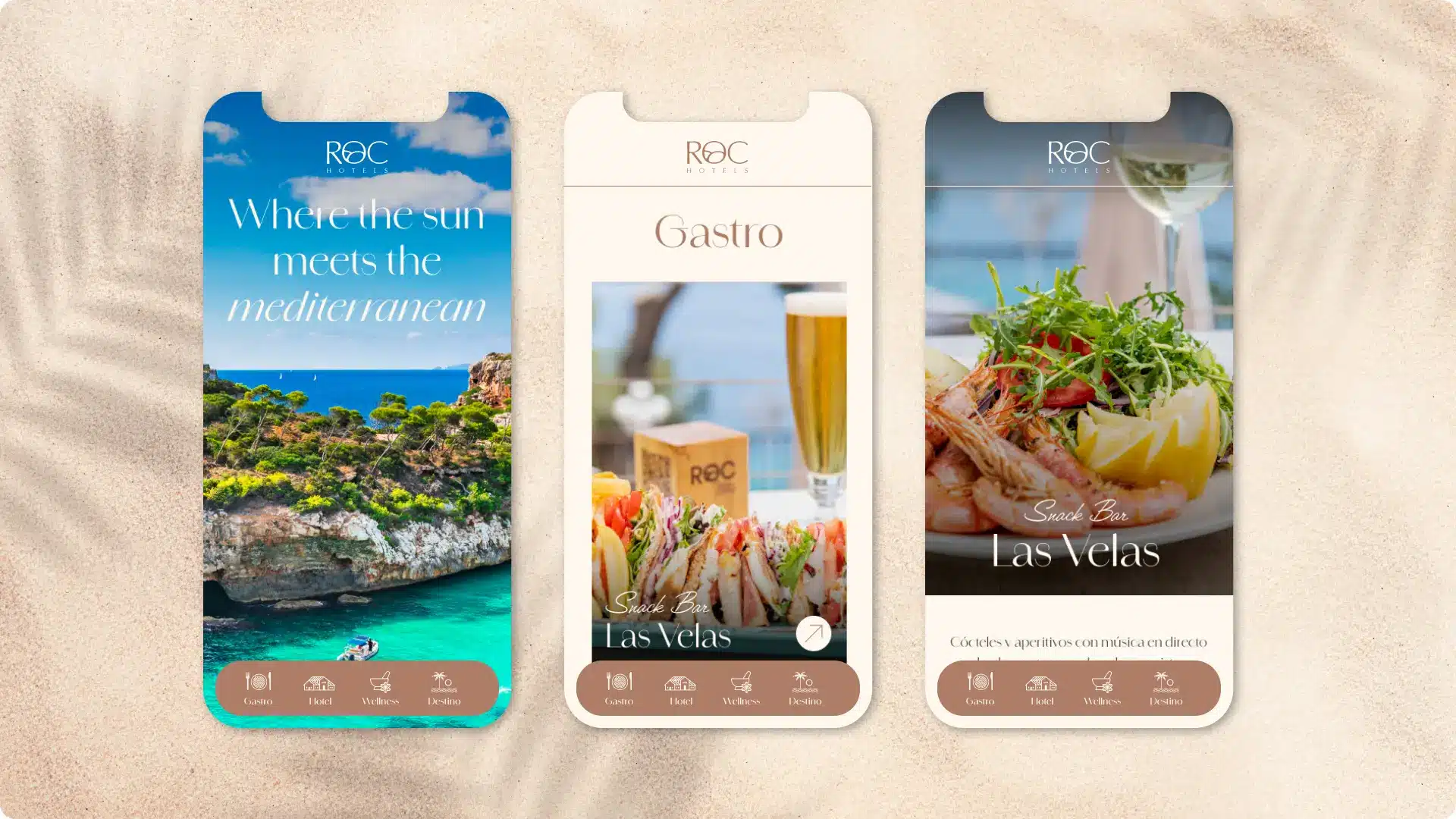
From there, everything changes: it automatically links to the hotel's PMS, activates a direct and personalized communication environment, and opens up opportunities to launch segmented messages, perfectly timed recommendations and collect useful data for the team.
What was once just WiFi, is now a channel that allows you to offer upgrades, suggest dinners at the right time, increase the average ticket and make decisions based on real data.
Invisible but decisive technology.
Marketing well used: the art of saying what's right, when it's right
A good guest experience in hotels is not only felt. It is written, launched and measured. And that's where marketing makes the difference.
Copy matters (a lot)
It's not the same as saying, "Would you like to make dinner reservations?" as it is to say, "Someone else is cooking today. And yes, there are green options'." The difference between a message that the guest ignores and one that converts is in three things: tone (direct, helpful, approachable), timing (we accompany, we don't interrupt), and personalization (knowing who the guest is and where they are at).
Triggers with intent
Some real examples:
- Suggested massage after 24 h at the hotel.
- Late check-out option on the last morning.
- Breakfast offer for those who do not have it included.
- Direct action following a poor NPS score.
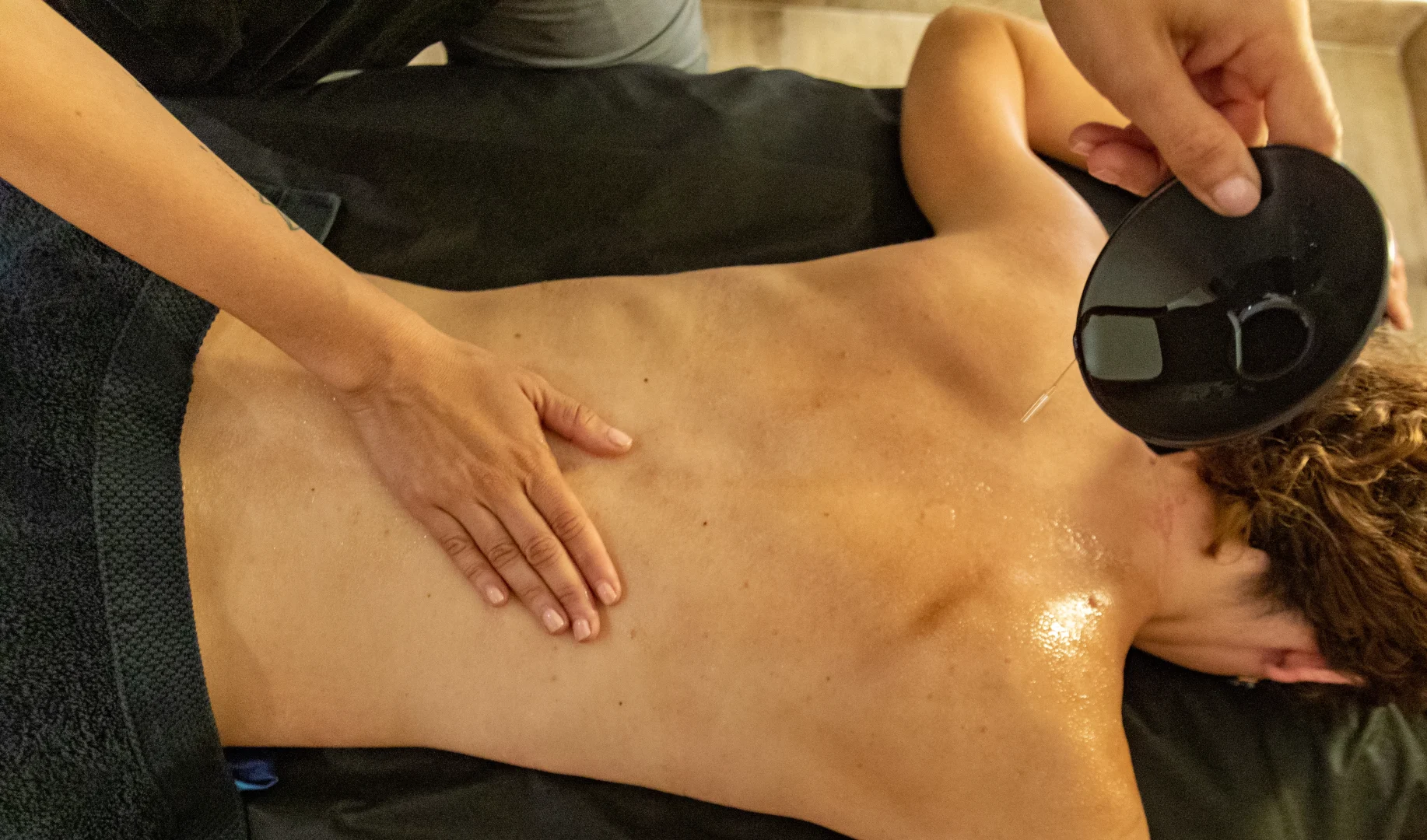
Every impact is an opportunity for conversion, loyalty or perception improvement. And if managed well, it not only elevates the experience. It also improves your metrics.
What if we measure?
At weglobeyou we leave nothing to chance. Each action has a goal, a channel and a KPI. We measure clicks, conversions, times, additional sales, satisfaction and return. Because a well-designed experience is not measured by how beautiful it is, but by how well it works.
Does your guest remember you or repeat you?
The guest experience has gone from being an added value to becoming a decisive factor in hotel profitability. It is not a matter of adding isolated details, but of building a coherent ecosystem that connects brand, technology, service and communication.
The data backs it up: improving online reviews by a single point can increase RevPAR by 1.42 %. Loyal guests spend more, stay longer and are more likely to recommend. And the return on an experience-focused strategy - the so-called ROX (Return on Experience) - is starting to form part of the key metrics in many steering committees.
At weglobeyou we work every week with hotels that have understood that designing experiences is not just about taking care of the customer. It's about activating levers that increase direct sales, optimize consumption in-stayThey reinforce digital reputation and build stronger, more memorable brands.
Technology is part of the process, but not the end. Strategic design, segmentation, thoughtful content and data analysis are the tools that make the difference between a hotel that delivers and one that connects. Because, in the end, the real goal is not just for the customer to return. It's that they do so knowing exactly why they chose to return.
Do you want to turn every stay into a competitive advantage?
Let's talk. And let's design together the experience that will make your guests book, repeat and recommend.