
 EN
EN  ES
ES Everyone wants to be sustainable. Or at least look that way.
Nowadays, it is enough to plant an aromatic plant at the reception desk or change the straws for bamboo to be labeled "sustainable" or "eco-friendly" hotel. But true sustainability goes much further. It is not improvised, it is not pretended and, of course, not sold on the basis of posturing.
The good news: more and more travelers want to stay in hotels that are committed to the planet and to people. The bad news: also distrust. According to Booking, more than half do not believe that accommodation with sustainable labels is really sustainable. And with good reason.
In this article we are not going to give you the typical list of generic tips. We are going to tell you what it means today to be a sustainable hotel, what practices demonstrate it and, above all, how to communicate it without falling into greenwashing. Because it's not enough to do things well: you have to know how to tell them. And in that, believe us, we have a lot to say.
What is a sustainable hotel?
A sustainable hotel is one that cares for the environment, respects people and contributes to the development of the territory where it operates. without sacrificing profitability. This is not a nice adjective, but a way of managing with a long-term vision. It is the only possible way for tourism to continue to have a future.
The definition may seem abstract, but it is not. International organizations such as the World Tourism Organization (UNWTO) and the Hotel Technological Institute (ITH) are clear: sustainable tourism is based on three essential pillars:
- EnvironmentalMinimize ecological impact, reduce emissions, use resources responsibly.
- SocialThe company's activities include: generating decent employment, protecting cultural diversity, and creating value in the local community.
- Economic: guaranteeing the financial viability of the business with ethical and transparent practices.
And what is not sustainability?
It is not replacing amenities with dispensers and continuing to import mangoes from the other side of the planet. It is not talking about "ecological awareness" while artificial turf is renewed with tanker trucks. Nor is it publishing a post on Environment Day and then looking the other way.
Real sustainability is not a pose, is a process. It doesn't require perfection, but it does require honesty. You don't have to have it all done to start communicating, but you do have to have more than just good intentions. And that, if you work well, is also noticeable..
Real-world best practices for being a sustainable hotel
When we talk about sustainability, we talk about those decisions that turn an accommodation into a sustainable hotel. Big and small. And above all, of coherence: that what you do behind the counter makes sense with what you say on the web. Here are some of those decisions that make a difference.
Environment: much more than turning off the lights
Environmental sustainability does not begin (or end) with changing light bulbs to LEDs. A truly committed hotel works from building design to cleaning protocols.
- EnergySolar panels, aerothermal or geothermal energy to reduce emissions. There are hotels that already operate with almost zero energy consumption. Literally.
- WaterThe following are just a few examples: dual flush systems, drip irrigation, gray water recovery or sensors in faucets that prevent invisible waste.
- WasteNo single-dose, yes to refillable amenities, composting of organics, effective separation. And no fear of saying goodbye to unnecessary plastic.
All this not only has an environmental impact: reduces costs, enhances reputation and demonstrates real commitment of a sustainable hotel.
Community and environment: sustainability that shows outside the hotel
Being sustainable also means make a positive impact on your surroundings. And we're not just talking about planting a tree on World Tourism Day.
- Choosing local suppliers. Fresh, seasonal products, with name and surname. And if they are organic, even better.
- Collaborate with destination associations. Spreading traditions, supporting cultural initiatives, sharing the space with those who live there all year round.
- Offer travelers real experiences, not window-dressing souvenirs.. A visit to a local farm, a dinner with zero kilometer products, a guided walk through the living history of the neighborhood.
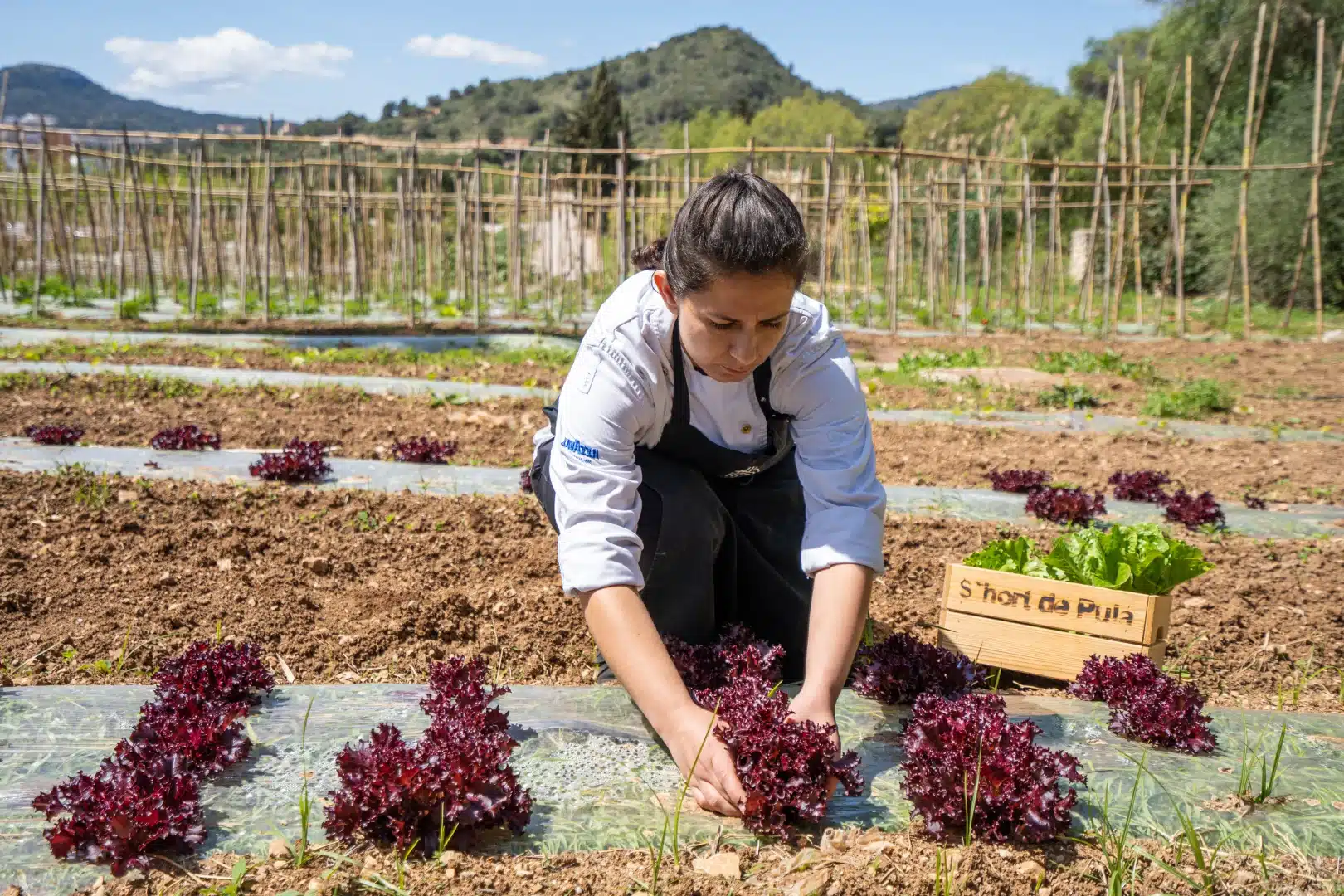
At weglobeyou we work with hotels that do it this way. The restaurant S'Era de Pulain Pula Golf Resortin Mallorca, for example, serves its own produce grown on the farm. And the team at Hotel Rincón Sol has woven partnerships with its community that are evident in every corner of the lodge. This is also sustainabilityIt can - and must - also be communicated.
Internal management in a sustainable hotel: everything starts at home
Social sustainability is not limited to taking care of the guest. It also involves how you treat your team and how you manage the day-to-day running of the hotel.
- Continuous training, fair working conditions, real diversity.
- Choose technology that is not only efficient, but durable (obsolescence is not sustainable, even if it comes with WiFi 6).
- Responsible purchase planning: what you choose, who you buy it from, how you transport it.
You don't have to be a five-star resort to do it right. The group Inns of Spainfor example, demonstrates that sustainability and efficient operation can go hand in hand even in smaller hotels.
What travelers really expect from a sustainable hotel
The numbers don't lie: today's traveler is changing. It wants to reduce its impact, seeks more authentic experiences and wants the money it spends to make sense. But you also have doubts, mistrust and demand proof. And that's where hotels have a huge opportunity. Or a problem, if they don't know how to communicate it well.
According to the most recent Booking.com report:
- 84 % of travelers considers it important to travel more sustainably.
- 53 % no longer thinks only of the environmental impact, but also of the effect that tourism has on local communities.
- 73 % wants your spending to benefit the destination's economy.
- 69 % wants to leave the places he visits better than he found them.
- 77 % seeks authentic experiences that connect with the local culture.
In addition:
- The 67 % of travelers turn off the air conditioning when not in the room.
- The 66 % reuse your towels.
- The 36 % choose less crowded destinations.
- And a 39 % organize your trips out of season to avoid crowds.
The bottom line? The host is already doing his part. And he expects you to do it too.
Moreover, he is not satisfied with symbolic gestures. Wants to understand what you are doing and why. He wants to know if your hotel is environmentally friendly, if it respects its staff, if it reduces waste and if it is taking real action (not just sharing photos of a bike next to a bougainvillea).
And this, believe us, is not a fad. It's a trend with a long way to go. Sustainability is not just good for the planet: is good for business. It improves brand perception, builds customer loyalty and - when communicated well - makes a real difference.
And that's where marketing comes in. But not just any marketing.
How to communicate sustainability (without greenwashing)
If there is one thing that can ruin all your work in sustainability, it is miscommunication.
And we are not talking about having an ugly website -that too-, but about something much more serious: falling in the greenwashing. Green posturing. The empty promises. The unsupported labels. That which makes 52 % travelers not trust, even if your hotel is doing things right.
At weglobeyou we say it a lot: being sustainable is fine. But telling it with honesty and strategy is what makes the difference..
Here are some key ideas:
1. Communicate actions, not intentions
No "we care about the environment". Tell it like you would tell a friend:
"This year we have reduced water consumption by 30 % thanks to sensors in toilets and gardens."
Now that's a credible message.
2. Use all your channels
The sustainability of a sustainable hotel is not just communicated in a web tab. It's in your posts on networks, in how it's part of the brand story, in the messages guests see in the elevator or on the QR at breakfast.
Do you have a local wine list? Do you serve seasonal produce? Speak up. And if you have a team involved, let them speak up too.
3. Train your team
The reception or front desk staff is key to the guest experience. If they know how to explain why you don't change the towels daily or where that tasty tomato comes from, the message is multiplied without the need for a campaign.
4. Be transparent
Don't have solar panels yet? Just started measuring your carbon footprint? That's okay. Count it for what it is: a journey you've started with commitment.
"This is what we already do. This is what we're improving. This is what we want to achieve."
This narrative not only generates trust: it builds loyalty.
5. Support yourself with a strategy
Sustainability is not a claim, it is a brand axis. And it needs a transversal strategy that includes:
- Brand positioning.
- Content design (texts, images, audiovisuals).
- Graphic identity aligned with values.
- Coherent editorial plan.
- Measuring results.
That's what we do at weglobeyou.
We work with hotels such as Pula Golf Resort, Hotel Rincón Solthe Hotel Salamanca Montalvo or the group Inns of SpainThe company's sustainability measures have not only been implemented, but have been able to make them part of its value proposition, its story and its competitive differential.
And no, we don't sell smoke. We sell strategy, content and reputation. And we do it with criteria, data and style.
Sustainability with impact (and planning)
Being a sustainable hotel does not mean being perfect. It means having a conscience, making responsible decisions and acting consistently. It means looking beyond the check-out and asking yourself what legacy you are leaving - in the environment, in people, in your own business model.
But being sustainable is not enough. Today you need to count it. Well. With truth, intention and strategy.
And that's where tourism marketing comes in, transforming what you do into what defines you. Not the one that stays in the pretty words, but the one that builds brand, reputation and real impact. The one that turns your actions into a story. The one that differentiates you without disguising yourself and makes your customers not only repeat, but also recommend you with pride.
That's what we do at weglobeyou.
When sustainability is communicated well, it shows.
For years we have been accompanying hotels, destinations and tourism brands that believe in another model. More conscious, more human, more profitable. And we know how to translate it into a strategy that works. That excites. That converts.
Do you want to communicate your commitment to sustainability without greenwashing? Do you want your hotel to be perceived as what it is already building? Let's talk about it. At weglobeyou we help you define, structure and tell your sustainable strategy with the honesty and creativity it deserves.
But first, tell us your story. We'll help you tell it to the world.